
Ancient Rome · An illustrated introduction
The Roman Legion: How Rome Built a Military Power
Discipline, adaptation, engineering, and manpower helped Rome build a Mediterranean empire. The legion was central to that story, but it never fought alone.
Rome’s greatest weapon was organization
Rome’s Mediterranean empire grew through generations of warfare and political decisions. In its early centuries, Rome was one city among many in central Italy, surrounded by rivals with their own armies, alliances, and ambitions. Its rise depended on more than a succession of brilliant generals.
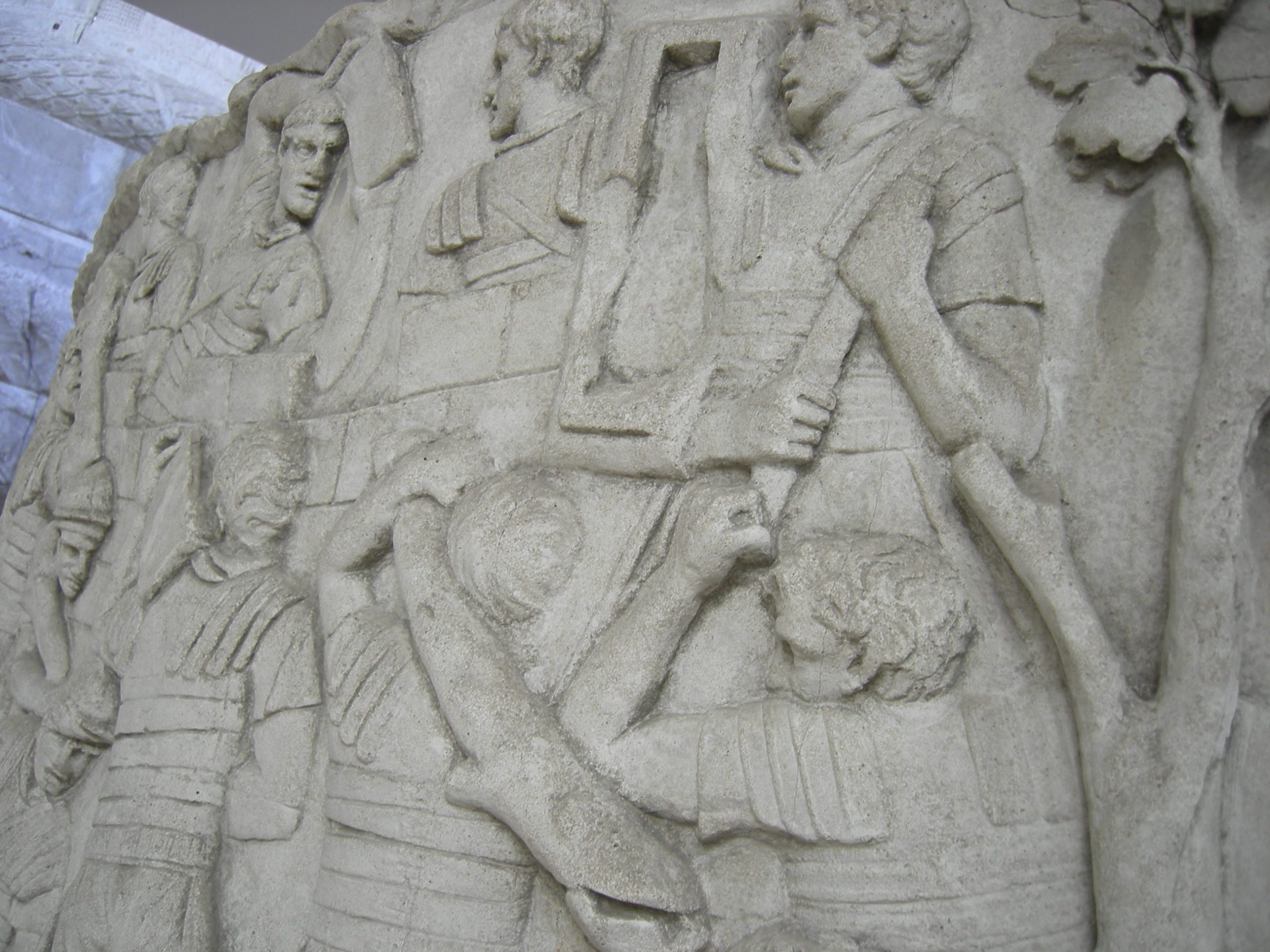
Over time, Rome built a military system that could recruit, supply, and replace large armies. The legion, a major formation of predominantly heavy infantry, connected battlefield discipline with roads, camps, equipment, and political power. Just as important were Rome’s Italian allies, its later auxiliary regiments, its fleets, and the communities that supplied them.
The word “legion” covers centuries of change. A legion fighting Hannibal in the third century BC was organized differently from one guarding the Rhine in the second century AD. This overview follows that development; the detailed guide to legionary organization, equipment, and campaigning explores how the system worked.

Before the legion became legendary
Early Rome had to survive before it could dominate. Etruscan cities, Latin communities, and Samnite peoples were sometimes enemies and sometimes partners. Warfare involved land, security, prestige, and control of routes. Conquest was followed by different arrangements with defeated communities, many of which supplied troops to future Roman armies.
This network mattered when Rome suffered defeats. It could draw on resources beyond the city itself. Its strength lay partly in the ability to keep fighting after reverses, although recovery imposed enormous costs on Roman citizens and their allies. Persistence was a political and social achievement as well as a military one.
From dense formations to a flexible legion
Early Roman warfare drew on the military traditions of Italy and the Greek world. Its precise development is difficult to reconstruct. The familiar story that Rome simply abandoned a Greek-style phalanx after fighting the Samnites is too neat: changes in equipment, recruitment, and tactics unfolded over generations.
Compare the phalanx and the manipular legion
A phalanx concentrated infantry in a dense formation, powerful when its frontage and cohesion held. The Roman manipular system divided heavy infantry into smaller units, offering commanders more ways to respond to uneven ground and a changing battle. Neither system guaranteed victory; terrain, training, leadership, and supporting troops mattered.
In the army described by the second-century-BC historian Polybius, the hastati formed the first heavy-infantry line, the principes the second, and the triarii the final reserve. Light infantry called velites skirmished in support. Age, experience, and resources helped shape these divisions.
The arrangement gave the army depth. Reserves could support troops already engaged, but the exact mechanics of replacing fighting lines remain debated. It is safer to speak of tactical options than to imagine an automatic conveyor belt of fresh soldiers.
How did a Roman attack work?
In many accounts, missiles preceded close combat: javelins could wound opponents, disrupt their order, or lodge in shields. Soldiers then advanced with shields and swords. The sequence varied with the period and circumstances. Republican triarii, for example, carried thrusting spears, and not every encounter allowed a carefully prepared volley.
The soldier’s equipment
Roman weapons worked within a larger fighting system. Their shapes changed over time, and Roman troops adopted useful ideas from other peoples. Open each item for the essentials.
Scutum: protection in close combat
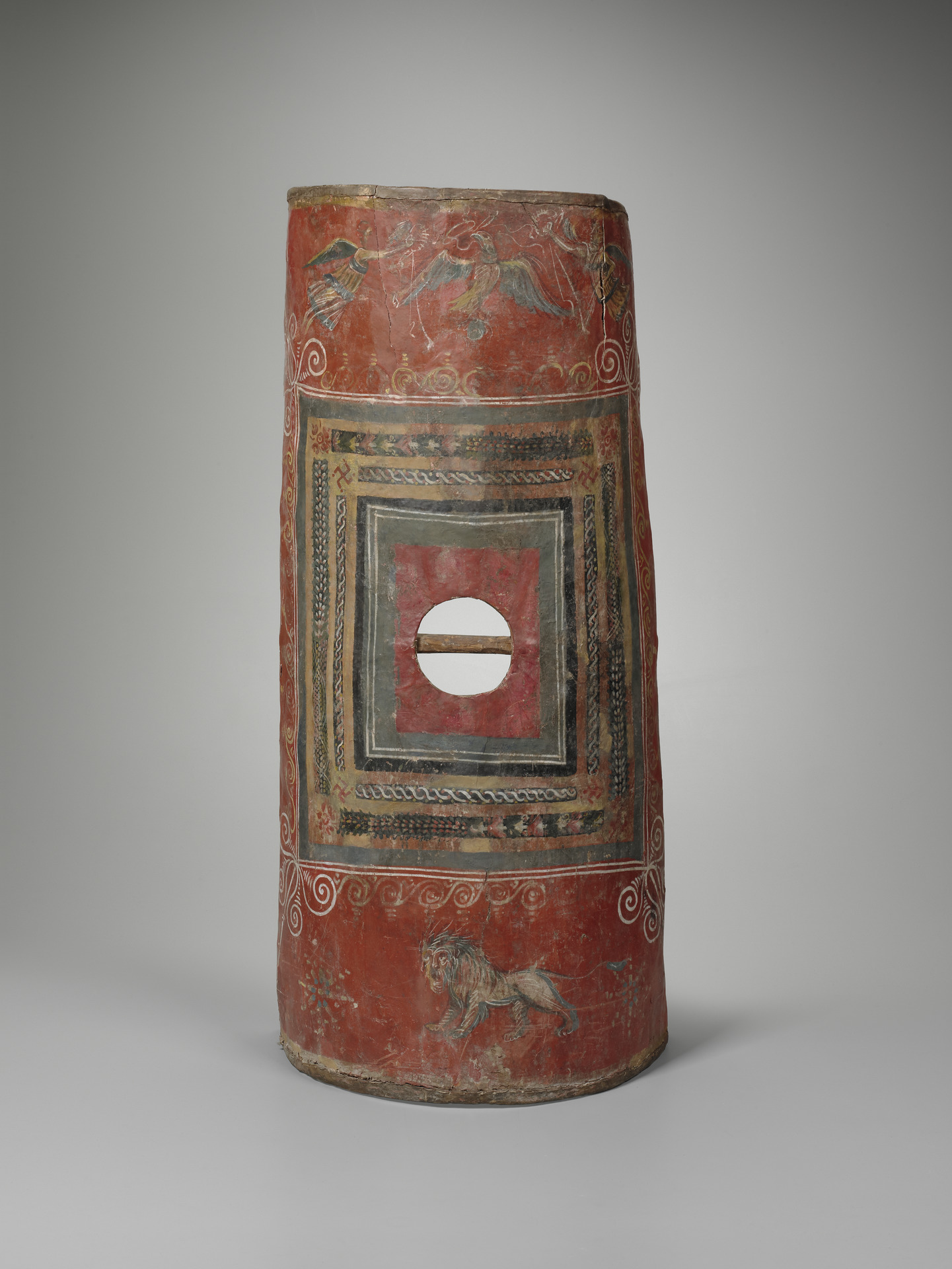
The large shield protected much of the body. Republican examples were commonly oval; the curved rectangular form is strongly associated with the early Empire. Shields were made mainly from organic materials, so complete survivals are rare. Not all Roman soldiers used the same shape.
Pilum: a javelin before the sword fight
The pilum had a wooden shaft and a long iron shank. It could penetrate or encumber a shield, making it harder to handle. Ancient accounts describe bending and particular design changes, but it is misleading to claim that every pilum was a standardized weapon designed to bend on every impact.
Gladius: a sword for cutting and thrusting
The short sword known as the gladius was effective in close fighting. Roman authors praised the thrust, but the weapon could also cut. Its success depended on coordination, protection, and practice, rather than a supposedly unique ability to kill.


Discipline, engineering, and supplies
A soldier had to march, dig, carry equipment, obey signals, and remain with his comrades under pressure. Training helped turn individuals into a functioning unit. Discipline could also be violent and coercive; it should not be romanticized as an effortless source of Roman superiority.
Legionaries built camps, bridges, siege works, and fortifications. A defended camp could protect troops and supplies after a march. Standard routines made construction and guard duties easier to organize, though camp shapes and layouts varied with terrain and circumstances.
Roads helped connect military bases and communities. Rivers and sea routes were also essential, especially for heavy cargo. Armies depended on farmers, merchants, pack animals, transport workers, and taxes or requisitions. A legion was an impressive working community, but it could not feed itself indefinitely.
Rome learned through crisis
- Italy: conflict and cooperationWars with neighboring peoples encouraged adaptation while alliances widened Rome’s recruiting base.
- Hannibal: survival after catastropheAfter the defeat at Cannae in 216 BC, Rome continued the war through further mobilization, strategy, and the support of many allies.
- The late Republic: longer wars and political conflictCampaigning far from home placed pressure on recruitment and rewards, while armies became entangled in disputes between Roman leaders.
- The Empire: standing forcesAugustus established a durable standing army. Legions and auxiliaries fought campaigns, guarded frontiers, and sometimes decided who would rule.
What about the “Marian reforms”?
Gaius Marius recruited poor volunteers for his war against Jugurtha in 107 BC. He is often credited with inventing the professional legion in a single reform program, but the evidence does not support that tidy story. Cohort organization, equipment, recruitment, and long service changed at different times.
Modern research therefore treats the so-called Marian reforms with caution. Soldiers’ expectations of pay, land, and rewards helped powerful commanders build influence, but military change alone did not cause the Republic’s civil wars.
Quick question: why could an army threaten Roman government?
A commander who could mobilize troops and promise rewards possessed leverage in political conflict. Soldiers also had their own grievances and interests. Loyalty to a general was important in some crises, but it was never the only motive or a universal replacement for loyalty to Rome.
Why the legion worked, and where it failed
Roman military power combined manpower, discipline, practical equipment, engineering, supplies, and political determination. Its opponents could be equally resourceful. Carthaginian armies, Parthian forces, and coalitions beyond the Rhine exposed serious Roman weaknesses.
The legion helped Rome conquer and govern, but it also enforced occupation, extracted resources, and fought fellow Romans. Studying it means seeing both institutional skill and the human costs of organized violence.
The legion was Rome on the march
Rome’s advantage was the ability to sustain a military system across generations, adapting it to new wars and new political realities. The eagle standard symbolized that power. Behind it stood much more than one weapon, one formation, or one reformer.
Continue with Inside the Roman Legion: Soldiers, Tactics, and Imperial Power for the full guide.
Sources and further reading
- Polybius, Histories 6.19–42: recruitment, equipment, and camps in the middle Republic; not a description of every Roman army.
- François Gauthier, “The Changing Composition of the Roman Army in the Late Republic and the So-Called ‘Marian-Reforms’”, Ancient History Bulletin 30 (2016): a reassessment of the traditional reform narrative.
- British Museum, Legion: life in the Roman army: objects and individual experiences of imperial military service.
- Yale University Art Gallery, Scutum (Shield), 1933.715: the illustrated third-century shield.
- English Heritage, History of Hadrian’s Wall: military engineering and the wider frontier system.
Image credits and license links appear with each illustration. BC and AD are used throughout. Ancient accounts, archaeological remains, and modern reconstructions answer different kinds of questions and should be read together.