
KNOW THE PRESENT · COMMUNICATIONS & POWER
The Internet Still Crosses the Ocean by Cable
The renewed struggle to protect undersea networks has a long history. The telegraph age shows why routes, repair ships, and evidence matter as much as the cables themselves.
In August 1858, a message from Queen Victoria crossed the Atlantic through a cable laid between Ireland and Newfoundland. A journey that had depended on the speed of a ship could now be made electrically. The congratulations were real. So was the cable’s weakness. Within weeks, the connection had failed.
Today’s network carries an almost unimaginable volume of information compared with that first line. Yet the ocean crossing still depends on manufactured strands placed on the seabed, brought ashore at particular beaches, and maintained by people working from ships. The language of the cloud can obscure this stubbornly physical geography.
It has become an urgent political subject again. On 8 October 2026, a new CSIS study reported unusually persistent activity by Chinese research vessels near subsea infrastructure. Earlier this year, governments and industry agreed on new measures to improve cable resilience. These developments raise a question with roots in the telegraph era: how can a network remain dependable when its most important connections lie beyond ordinary sight?
A historical analysis of the cable-security debate, with current developments checked on 10 October 2026. Statements about suspicious activity are distinguished from proven damage and established intent.
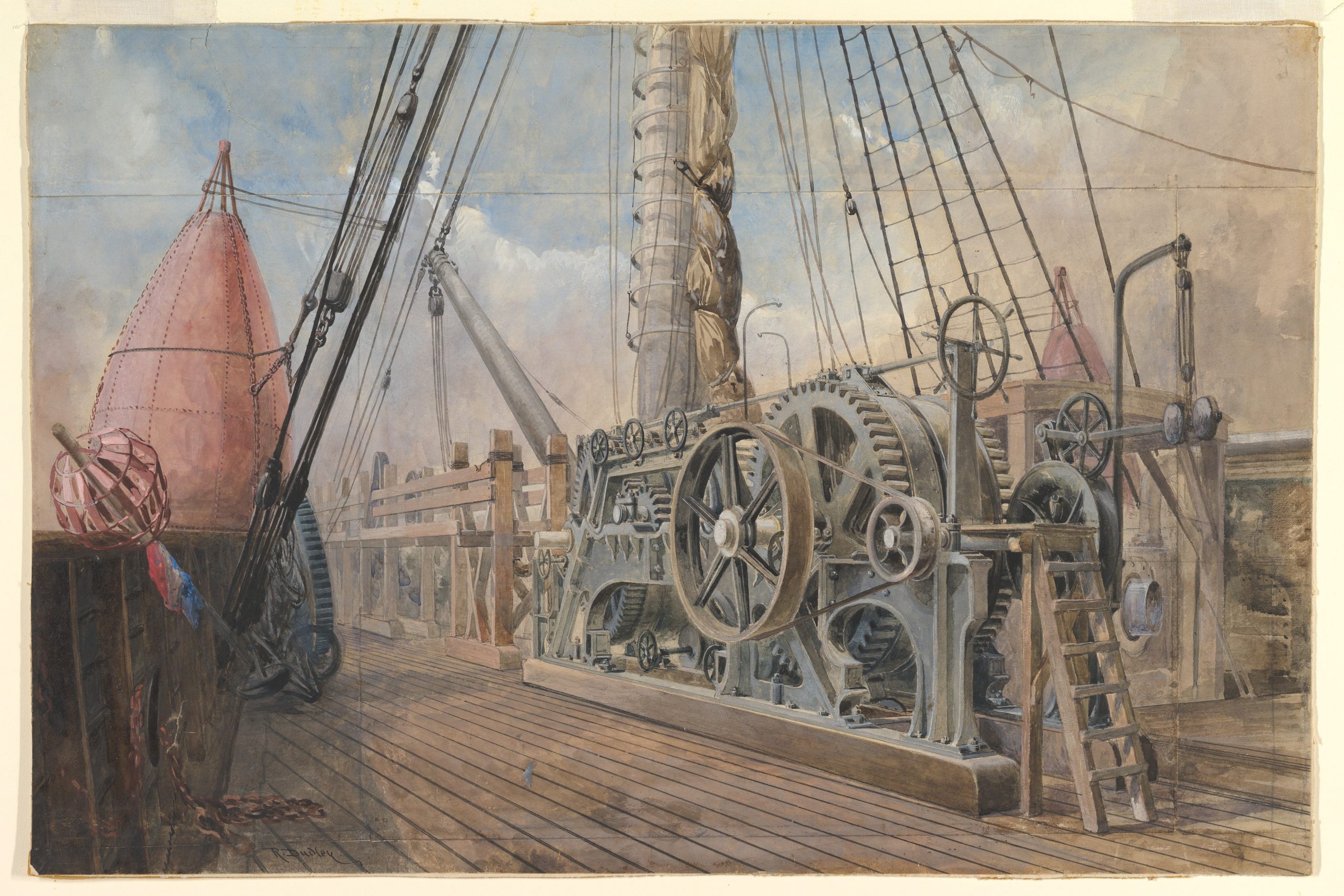
The first crossing was only the beginning
The Atlantic Telegraph Company was founded in 1856 by businessmen including Cyrus Field, John Watkins Brett, and Charles Tilston Bright. Its ambition demanded more than an invention. Investors had to finance thousands of miles of cable; manufacturers had to make it; navigators and engineers had to carry it across an ocean whose depths were imperfectly understood. The Library of Congress account describes how the proposed route was even imagined as a comparatively flat and shallow “telegraphic plateau.”
The 1858 cable briefly turned that ambition into a working connection. Victoria’s official message to President James Buchanan took about sixteen hours to transmit, according to the Science Museum’s account. That was slow even by telegraphic standards, but much faster than carrying a letter across the Atlantic. The achievement proved that electrical communication could span the ocean. Its early failure showed how far the operators still were from a dependable service.
Another expedition, using the enormous steamship Great Eastern, lost its cable in 1865. In 1866 the ship succeeded in laying a new one. The crews then returned to the broken line, recovered it, and completed that connection too. Royal Museums Greenwich records both achievements.
The second operation deserves as much attention as the first. The breakthrough included the ability to recover a failed investment from the seabed and put it back to work. A surviving transcript at Greenwich preserves news received through the recovered 1865 cable between 2 and 8 September 1866. Repair had become part of the story of connection.

A world network, with particular centres
The cables soon reached far beyond the North Atlantic. In June 1870, the last section of a chain connecting Britain with India came ashore at Porthcurno in Cornwall. The route passed through Portugal, Gibraltar, Malta, and Egypt, as PK Porthcurno’s historical collection explains. A global message moved through a sequence of places, companies, and jurisdictions.
The choice of landing place mattered. The original plan had favoured Falmouth, but Porthcurno’s sheltered sandy beach offered a more reliable setting. The station grew as additional cables arrived. In 1872, the company behind the first connection merged with others to form the Eastern Telegraph Company. By 1929, fourteen operational submarine cables terminated at Porthcurno. Historic England’s history of the station documents that long accumulation of infrastructure.
A map of the network looks like a web spread over the world. Look more closely and some places are joined again and again. Existing stations, established commercial routes, and the ability to manage a landing could draw later investment toward the same locations.
For Britain, those connections linked a metropolitan centre to an empire. India was under colonial rule; the map’s elegant lines crossed profoundly unequal political relationships. Faster communication could serve merchants and families while also strengthening the reach of an imperial government. The network’s usefulness and the distribution of power within it were inseparable questions.

Protection was international. Power remained national.
Governments had practical reasons to cooperate. The 1884 Convention addressed intentional and culpably negligent damage to submarine telegraph cables outside territorial waters. It required vessels to keep clear of ships engaged in cable repairs and provided compensation for an anchor or fishing gear sacrificed to avoid damaging a cable.
These provisions reveal what officials already understood. The threat could come from ordinary maritime work. Protection required rules for how different users of the sea behaved around one another. A cable’s owner could not keep the system safe simply by manufacturing a stronger wire.
The agreement also contained a sharp limit. Article XV left the freedom of action of belligerents unrestricted by the convention. Cooperation to preserve communications did not settle what rival states would do to those communications in war.
That distinction became concrete in 1914, when Britain cut German transatlantic cables. Archival research on British intelligence traces the resulting disruption to German diplomatic, commercial, and intelligence traffic. Control over a route could affect who communicated directly and who had to seek an alternative.
This history establishes that cables can become strategic targets. It cannot establish who is responsible for a particular fault today. Moving from the first claim to the second requires evidence about the incident itself.
What changed beneath the sea
The material inside a modern communications cable is different. Thin glass fibers carry pulses of light, with protective layers around them. In deep water, a cable may be only about as thick as a garden hose; nearer shore, it can have more armour and be buried for protection. TeleGeography’s cable guide explains these differences. A cable should not be confused with the much heavier power lines that also cross the seabed.
The network has changed as well. A Victorian telegram was a discrete message handled through telegraph offices. Today, a person’s international connection may depend on a chain of domestic networks, data centres, landing stations, and submarine systems. The European Commission estimates that submarine data cables carry 99 percent of intercontinental internet traffic. That is an estimate about traffic crossing continents, not a claim that every local online interaction travels under an ocean.

1 polyethylene; 2 polyester tape; 3 steel wires; 4 aluminium water barrier; 5 polycarbonate; 6 copper or aluminium tube; 7 petroleum jelly; 8 optical fibers.
Alternative routes can keep a service working when one cable fails. But they must actually be available to the operator, with enough usable capacity. A second line offers less protection against a shared local hazard if it runs through the same vulnerable corridor or landing area. Counting cables and testing independence are different tasks.
The consequences therefore vary sharply by place. TeleGeography describes how protected circuits can reroute traffic, while a connection without a second path remains interrupted. Tonga’s experience after the 2022 volcanic eruption demonstrated how severe the consequences could be for an island dependent on limited international links. Satellite service can provide important backup, but that does not make every affected connection equivalent to its normal fiber service.
Reading the alarms of 2026 carefully
The CSIS researchers analysed the movements of more than two hundred research vessels. They found that Chinese vessels in their sample spent a disproportionately large share of observed time near subsea infrastructure on the high seas. U.S. research vessels also ranked among the more active fleets in their comparison. Their interpretation is that such activity may support military preparation. The report also acknowledges a crucial limit: the statistical results do not independently establish the intent of individual missions.
That qualification belongs alongside the finding. A vessel’s track can justify closer attention without proving that it damaged a cable. Survey data can have civilian and military applications. Those possibilities create a security problem; they do not remove the need to distinguish observation from inference.
In April, the British government reported that the UK and allies had tracked Russian submarines near undersea infrastructure. The Associated Press reported the defence secretary’s statement that there was no evidence of damage to cables or pipes. An operation monitored, a suspected intention, and a cable actually cut are three different claims.
Meanwhile, the everyday maintenance problem continues. In February 2026, ITU and the International Cable Protection Committee described roughly two hundred cable faults a year, with more than four-fifths caused by fishing and anchoring. Their account also identified natural hazards and equipment failures. A security debate focused only on hostile states would miss much of the work that keeps connections available.
The less dramatic work of staying connected
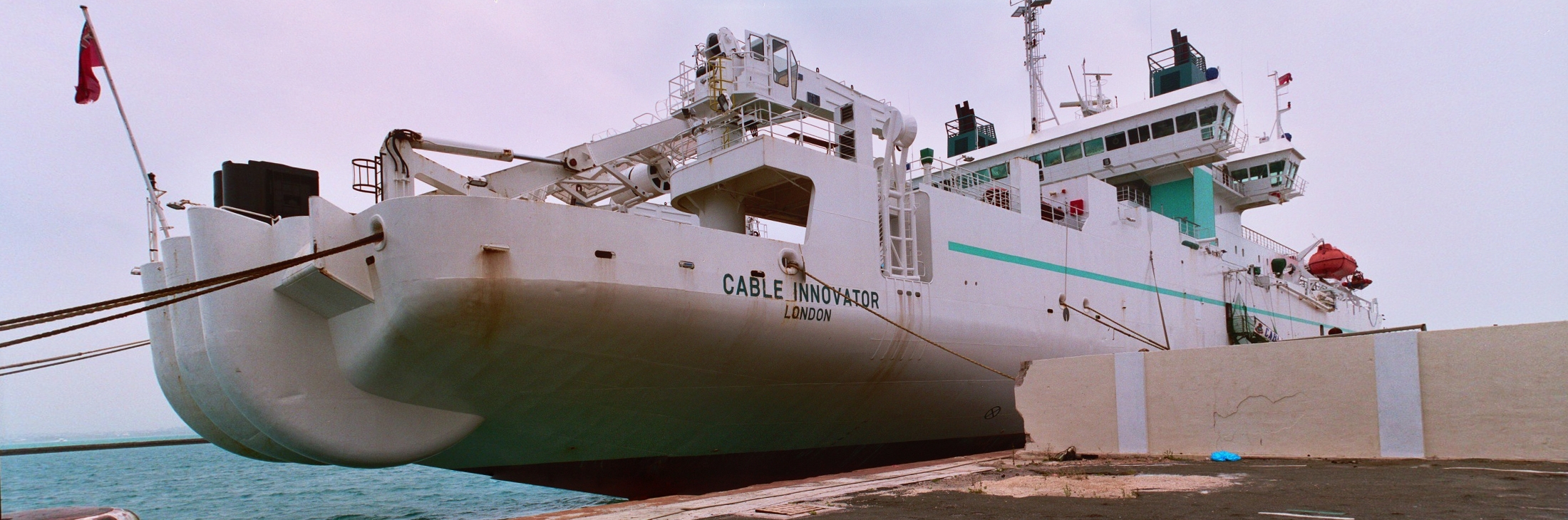
Repair is still maritime labour. A vessel has to reach the site, recover the damaged cable, replace the failed section, and return the repaired line to the seabed. TeleGeography’s account of cable repair describes a process dependent on specialised equipment, crews, and spare cable. Before that work begins, the ship may also have to wait for access or permits.
This helps explain the emphasis of ITU’s July 2026 recommendations. The international advisory body’s final report concentrated on quicker deployment and repair, better understanding of risks, and greater geographical diversity. Its priorities included coordination between governments and industry and the needs of countries dependent on very few connections.
The European Commission’s repair programme shows how that thinking can become a concrete policy. A €40 million call launched in June 2026 sought to increase submarine communications-cable repair capacity, alongside funding for regional cable hubs. A funding announcement is not a completed repair fleet. Its practical value will depend on equipment, trained personnel, arrangements between operators, and the ability to deploy them.
What the comparison can, and cannot, tell us
The telegraph age brings three questions into focus. Where does a connection physically pass? Who has authority over the places it must reach? And who can restore it after a break? None can be answered by looking at a cable’s advertised transmission speed alone.
There are also firm limits to the comparison. Today’s internet is not a single imperial telegraph network enlarged. Its owners, technologies, users, and paths are far more varied. A nineteenth-century pattern of British cable power does not map neatly onto the position of any present-day state or company. Nor does the cutting of cables during an established war make every unexplained peacetime outage an act of war.
The most useful continuity is more practical. Building a connection and keeping it available are separate achievements. The first Atlantic cable made that difference visible in 1858. The recovery of the lost line in 1866 showed what it took to narrow the gap.
In 2026, much of the decisive work remains out of view: a genuinely independent route, a stocked repair depot, an available ship, or an investigation careful enough to distinguish an accident from an attack. Those are the conditions that allow an ocean crossing to disappear from the experience of the person sending a message.