
Histovia · World War II · Intelligence & deception
Operation Fortitude: How D-Day Deception Kept Germany Looking at Calais
The landings made Normandy impossible to hide. The deception gave German commanders a reason to believe the main attack was still to come.
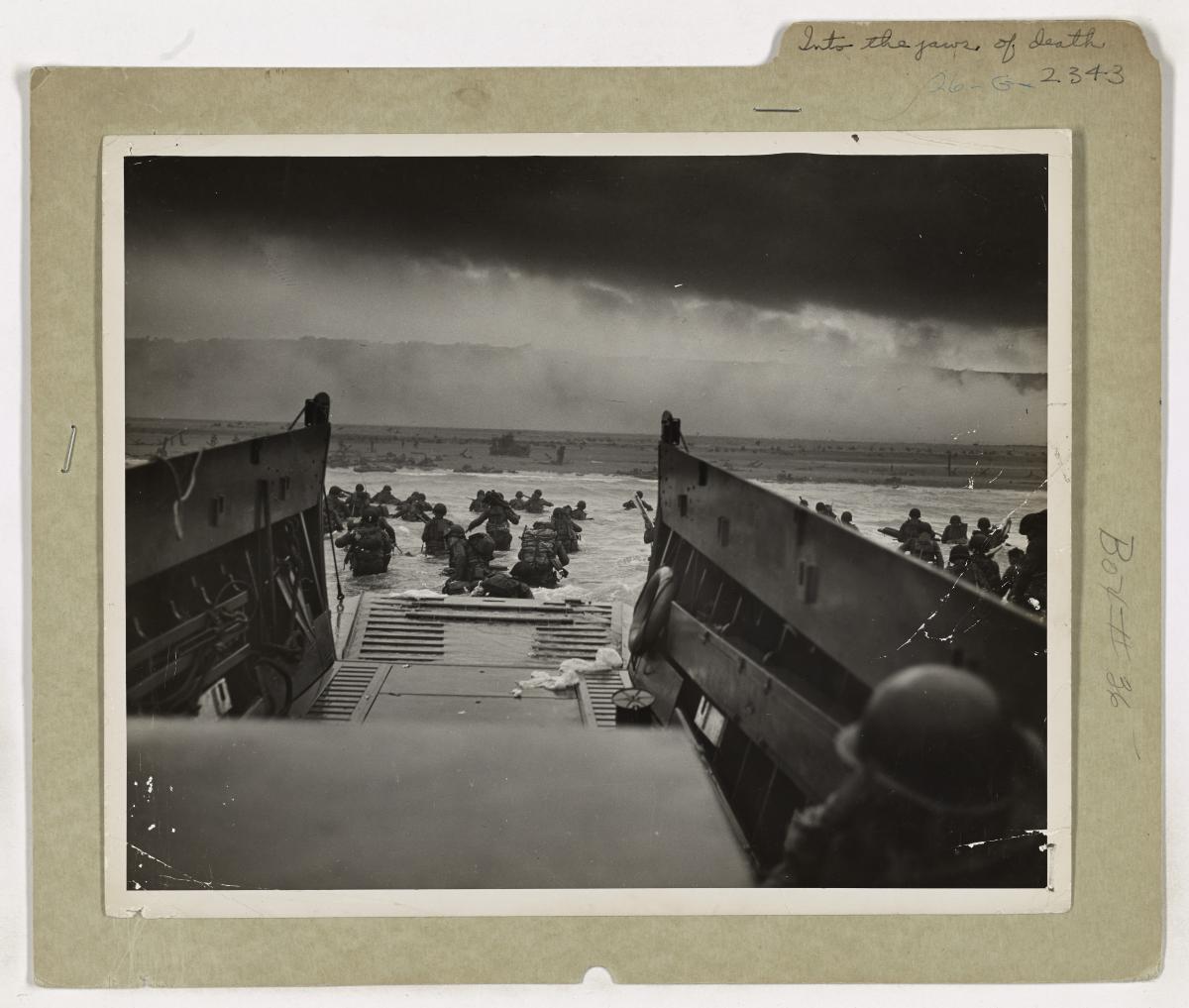
By 9 June 1944, Allied troops were already fighting in Normandy. For the intelligence officers protecting the invasion, that created a different problem from the one they had faced a week earlier. Secrecy could no longer conceal the landing place. Could deception still keep German attention fixed somewhere else?
Operation Fortitude’s answer was to make the obvious event fit a misleading larger story. Normandy, the Allies suggested, was drawing German forces away from a second, more important landing near Calais. The success of this story depended on geography, patient preparation and sources the Germans believed they could trust. Its most revealing moment came after D-Day had begun.
01 / The believable target
Why Calais made such a convincing story
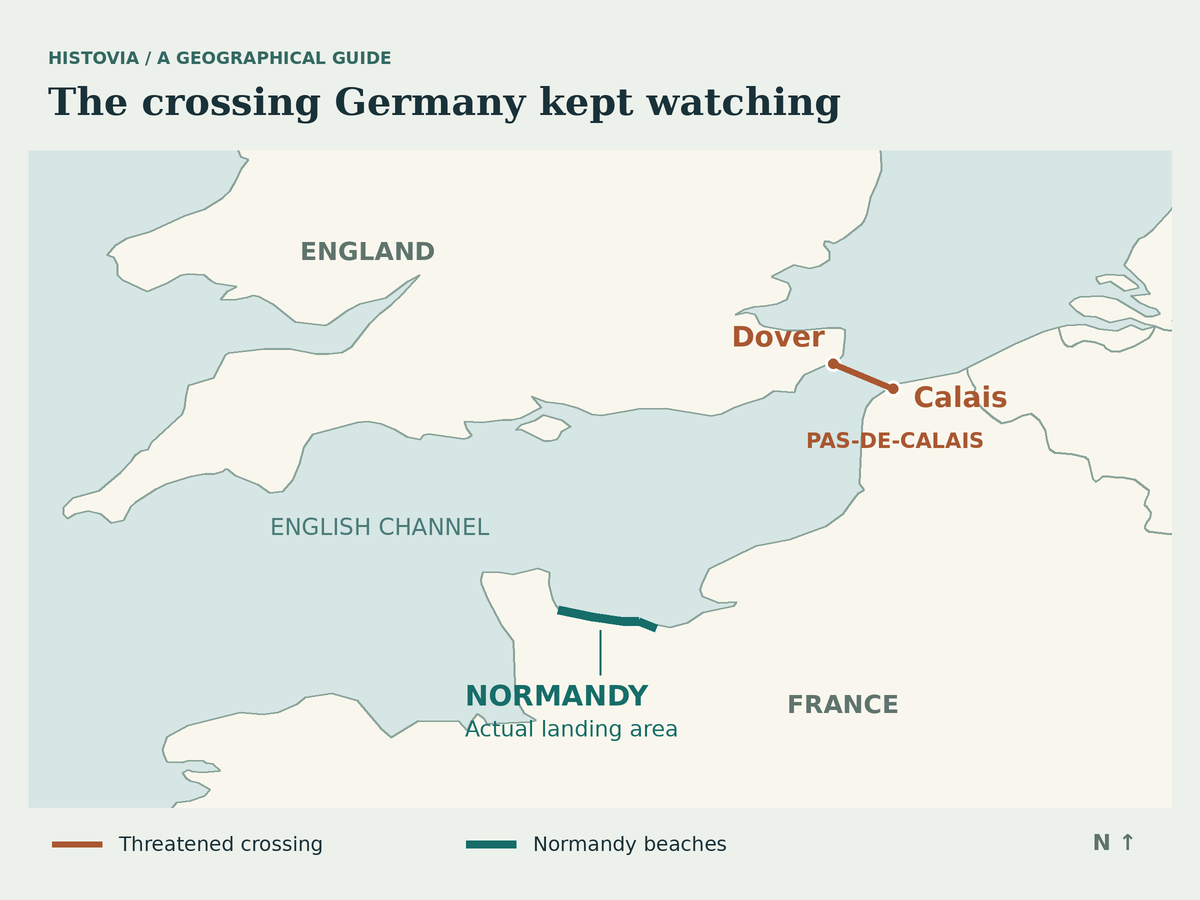
Look across the Strait of Dover and the deception’s starting point becomes clear. The Pas-de-Calais offered the shortest sea crossing between England and France. A major Allied force gathering in southeastern England would therefore appear to have an obvious destination. Fortitude exploited an expectation that already existed; it did not have to make an implausible target seem plausible overnight.
The Allies had good reasons to choose Normandy instead. As the National Army Museum explains in its account of D-Day, Normandy offered suitable landing beaches, lighter fortification than Calais and access within Allied fighter range. The short crossing was only one consideration among several. German assessments could go wrong by giving it too much weight.
There was also a practical difference between expecting an invasion and knowing where to commit reserves. A commander could regard Normandy as dangerous while still fearing a larger blow elsewhere. Fortitude sought to sustain that dilemma. Its value lay in the decisions it encouraged, especially reluctance to strip the Calais region of troops.
02 / Names that matter
Bodyguard, Fortitude and FUSAG
These names describe different levels of the plan. The British government’s historical overview places Fortitude within Bodyguard, the broader strategy intended to mislead Germany about Allied strength, timing and objectives.
Bodyguard
The wider deception strategy protecting Allied invasion plans in 1944.
Fortitude North
A threatened attack on Norway, intended to keep German forces concerned about the northern theatre.
Fortitude South
A threatened main landing in the Pas-de-Calais, sustained even after troops went ashore in Normandy.
FUSAG, the First United States Army Group, supplied Fortitude South with its apparent striking force. Keeping the terms distinct matters: a photograph of a dummy vehicle does not, by itself, tell us which operation used it or what German intelligence learned from it.
03 / Making an army seem present
A real general at the centre of an imagined attack
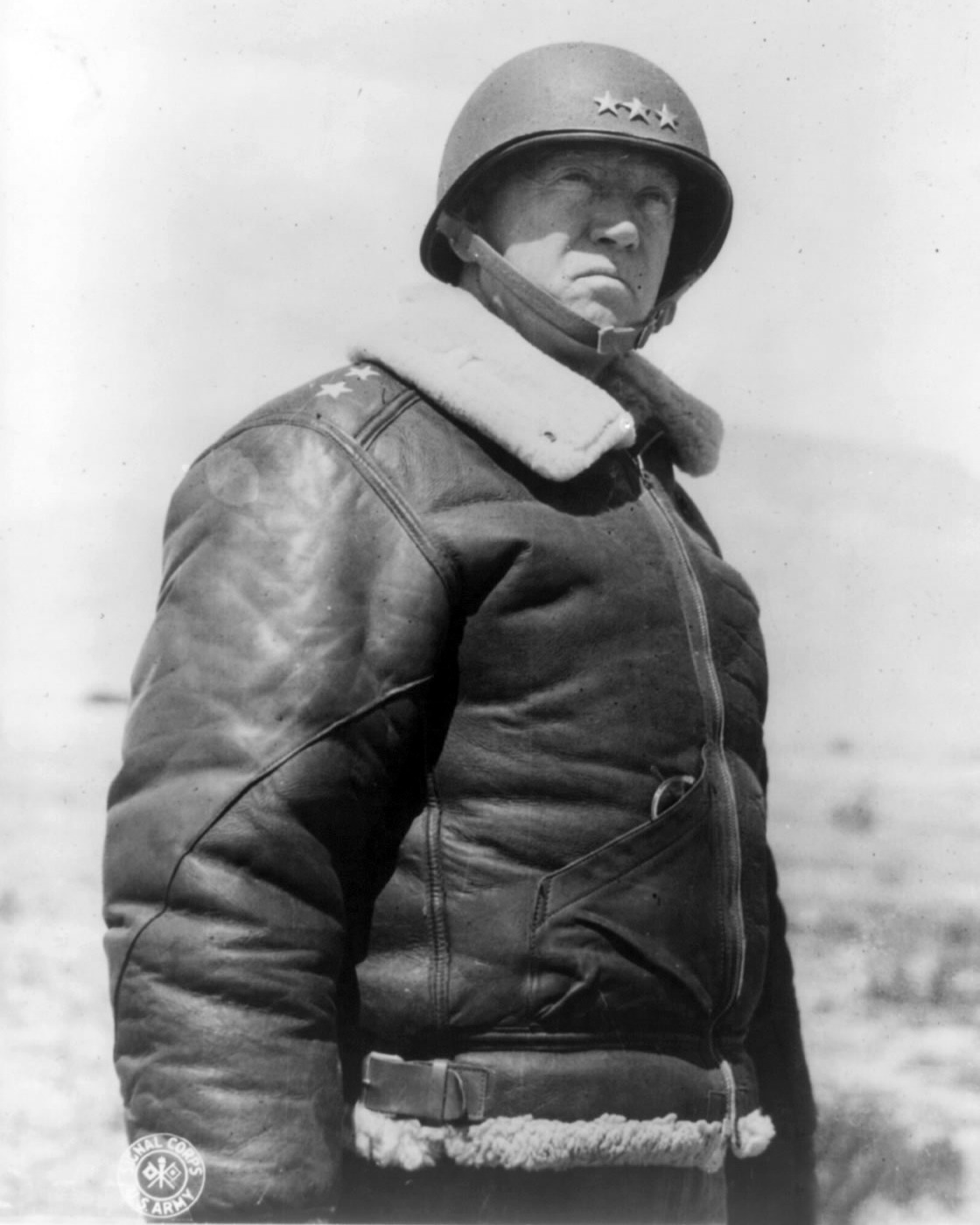
General George S. Patton gave the projected force a recognisable commander. His reputation made an important future assignment credible. The deception presented FUSAG as a major force in southeastern England awaiting its opportunity to cross the Channel.
Its supposed presence was supported in several ways. English Heritage’s study of Fortitude South describes dummy landing craft built from materials including wood, canvas and floating barrels, alongside mock vehicles and radio traffic. Double agents passed information about the force’s composition and whereabouts. Real troops were also part of the picture, although some formations represented as belonging to FUSAG moved west to prepare for Normandy.
Dover Castle’s tunnels contributed to the wireless deception. Signallers helped simulate the communications of a force preparing to embark. An army needed a convincing administrative presence as well as a visible one: messages, movements and relationships between units could help make scattered reports appear to belong to the same organisation.
Yet describing what the Allies staged is only the first half of the historical question. We must also ask what reached the enemy, how it was interpreted, and whether it changed an order.
04 / A reputation built before D-Day
GARBO and the work of earning trust
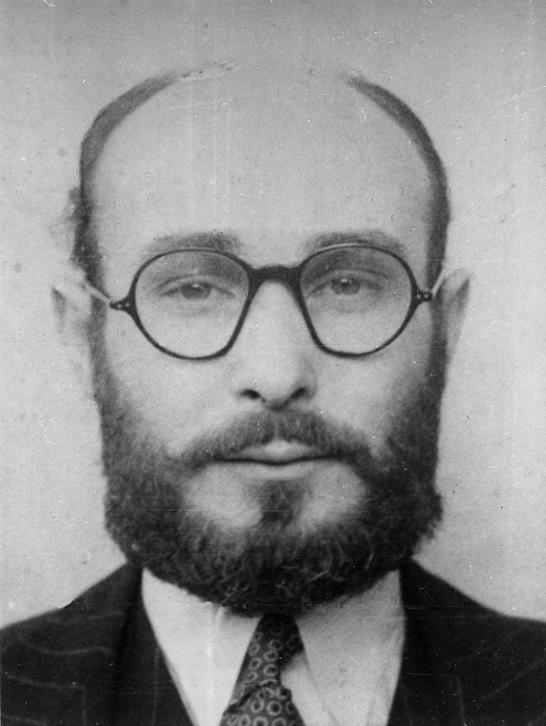
One of those trusted channels belonged to Juan Pujol García, the Spanish double agent known to the British as GARBO. His career did not begin with a flawless recruitment. After unsuccessful approaches to British officials, he offered his services to Germany and began producing reports about Britain while living in Lisbon.
Once brought to Britain in 1942, Pujol worked with the Spanish-speaking MI5 officer Tomás Harris. Together they developed an elaborate imaginary network. MI5’s account of GARBO and Harris describes 27 invented sub-agents, furnished with biographies and circumstances that explained what they could discover.
Trust required more than a succession of falsehoods. Before the November 1942 landings in North Africa, the network supplied accurate information arranged to arrive too late to be useful. Such reports could demonstrate apparent reliability without providing timely warning. By the time of the Normandy operation, German confidence in the source had been cultivated over years.
Recent archival scholarship adds an important corrective to the lone-spy legend. In “The Art of Double-Cross”, published in Intelligence and National Security in 2024, Jago Morrison examines this correspondence as a collaborative writing operation. The voices of the agents had to remain consistent, their accounts had to fit together, and the people handling them in German intelligence had to remain invested in their credibility.
That interpretation helps explain why a fictional network could be more persuasive than one dramatic forged document. Repeated contact created habits of trust. A report arrived with the weight of its source’s earlier performance, and with a familiar explanation of how the information had been obtained.
05 / The deception survives the landing
9 June: explaining away the strongest evidence
The date on one surviving record makes the central point unusually clear. The National Archives displays a translation of GARBO’s message as received by German intelligence, dated 9 June 1944 and catalogued as WO 208/4374. Three days after D-Day, it presented the Normandy landings as a diversion and directed attention toward a main assault in the Pas-de-Calais.
The deception could accommodate the fact that the Allies had landed. The falsehood concerned what that landing meant. If a larger force remained ready in Britain, reinforcing Normandy too heavily might be precisely the mistake the Allies wanted Germany to make.
That is why the message deserves more attention than a photograph of a rubber tank. It exposes the argument the deception was trying to place inside German decision-making. The danger at Normandy became a reason to worry about Calais as well.
Encourage uncertainty about where and when the main invasion will arrive.
Allied landings make the Normandy assault a fact on the ground.
GARBO’s message presents that assault as a diversion from a further attack.
As evidence, the record also has limits. It shows a deception message and its intended interpretation. Establishing its military effect requires comparison with intelligence assessments, orders and troop movements. A persuasive message is part of an explanation, not a complete history of the battle.
06 / Listening to the audience
How the Allies checked whether the story was believed
The planners were not limited to sending reports and hoping. Signals intelligence offered a way to examine German responses. GCHQ’s account of D-Day intelligence explains that decrypted Abwehr communications helped confirm German belief in FUSAG and its threatened landing near Calais. Knowledge of how German intelligence collected and processed information also helped shape the deception.
This distinction between transmission and reception is crucial. A false report might be ignored, distrusted or misunderstood. Reading the enemy’s communications could reveal whether it had entered the picture used by senior commanders. The Allies could therefore study the reception of the fiction as well as its presentation.
Fortitude combined two unusual advantages: controlled channels for feeding information to Germany and secret access to parts of Germany’s own communications. The resulting evidence is stronger than merely knowing that a decoy camp existed. It brings us closer to understanding what the enemy actually believed.
07 / Success, with limits
What Fortitude helped achieve
The continuing Calais threat helped keep German forces committed away from Normandy while the Allied foothold developed. That was a consequential achievement. It should not be turned into a claim that every German commander ignored Normandy, or that deception alone secured the invasion.
There is particular reason to be careful with the most photogenic part of the story. In a National WWII Museum interview on Fortitude, historian Mary Kathryn Barbier notes the limited German aerial reconnaissance available to observe the staged camps by May 1944. She also cautions that the volume of simulated radio traffic did not mean every transmission was received and analysed. The familiar inventory of decoys should not become an automatic ranking of what mattered most.
Meanwhile, the invasion still demanded ships, landing craft, air support, reconnaissance, training and sustained supply. The beaches were defended, and securing a foothold required fighting. Fortitude could influence where German strength was available; it could not remove the physical hazards faced by troops coming ashore.
Fortitude is most revealing when we follow the connection between information and action. Geography made Calais credible; an apparent army gave the threat substance; trusted agents explained what events supposedly meant; intercepted communications helped the Allies assess the response. No precise total of lives saved can be read straight out of that chain.
Its enduring lesson is about the persistence of a convincing explanation. On 6 June, reality changed dramatically. Fortitude helped preserve a misleading interpretation of that reality during the dangerous days that followed.
Read the evidence
Sources & further reading
This article distinguishes wartime records from later institutional histories and historical interpretation. Links were checked during research on 5 October 2026.
- The National Archives, “Operation Overlord and D-Day”. Includes GARBO’s 9 June message, WO 208/4374.
- The National Archives, Archives Live: D-Day resource pack. The BRONX coding exercise reproduces material from KV 2/2098, printed page 15.
- MI5, “Agent GARBO”. Pujol, Harris and the construction of the imaginary network.
- English Heritage, “D-Day Deception: Operation Fortitude South”. FUSAG, dummy equipment and Dover Castle’s signalling role.
- GCHQ, “D-Day, 75 years on”. Signals intelligence and evidence of German belief in FUSAG.
- Gill Bennett, “What’s the Context? D-Day, 6 June 1944”. The British government’s historical overview of the broader intelligence effort.
- National Army Museum, “D-Day”. Geography, preparation and the invasion’s military context.
- Jago Morrison, “The Art of Double-Cross: writers in strategic deception during World War Two”, Intelligence and National Security 39, no. 2 (2024), 232–249. Open-access archival research.
- The National WWII Museum, “Part 5: D-Day and Deception”. Includes historian Mary Kathryn Barbier on the reach and limitations of deception channels.
- The National WWII Museum, “New Museum Exhibit Reveals Secrets of World War II’s ‘Ghost Army’”. The separate history of the 23rd Headquarters Special Troops.
Image records: Omaha Beach, NARA · Patton, U.S. Army Signal Corps · GARBO, The National Archives · Natural Earth map data. Photographs are archival, with no AI-generated historical scenes.

