
Religion & Ideas
Nalanda: The Monastery That Carried Learning Across Asia
Land grants, demanding teachers and traveling manuscripts made Nalanda a center of learning whose influence reached far beyond its monasteries in Bihar.
A large copper plate from Nalanda records an arrangement that linked a monastery in Bihar to a ruler across the sea. In the ninth century, the Pala king Devapala granted five villages to support a religious establishment founded at Nalanda by Balaputradeva, ruler of Suvarnadvipa, associated with Sumatra. The National Museum in New Delhi’s catalogue identifies the purposes of the grant: maintaining monks and copying manuscripts. Land revenue in eastern India helped sustain a foundation whose patron belonged to the maritime world of Southeast Asia.
That document offers a particularly revealing entrance into Nalanda’s history. The great monastery was a place where people studied, but learning did not float above the material world. It required food, shelter, political support, manuscripts and teachers. Its international reputation rested on networks that brought those things together and carried the results away again.
Nalanda’s ruined brick buildings are now famous. The less visible structure was the movement between them and distant places: a student approaching a teacher, a messenger carrying a royal request, a text being copied, a scholar returning home with knowledge that had become his responsibility to transmit.
A religious landscape became a scholastic center
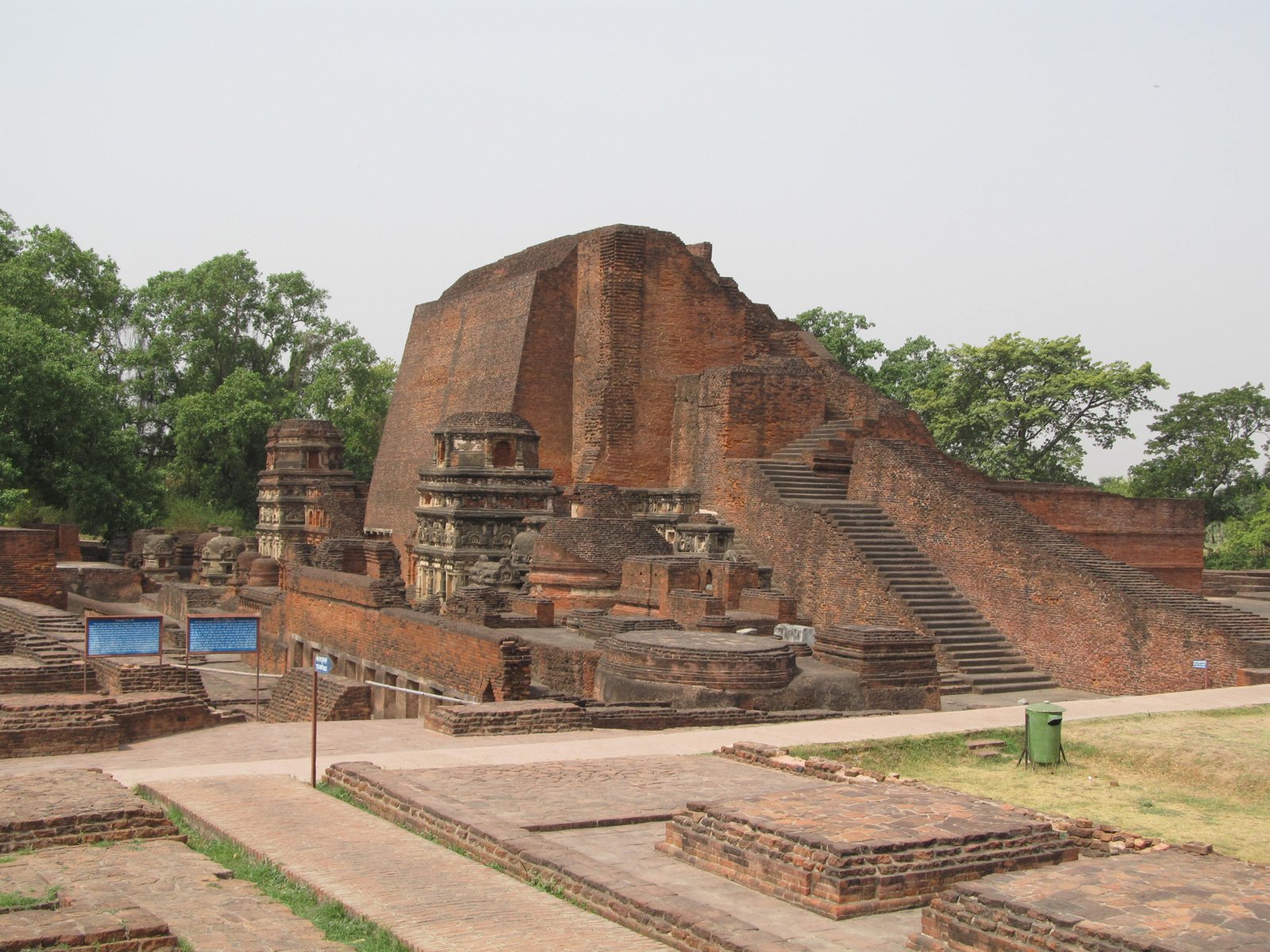
Nalanda lay in Magadha, a region deeply connected with the early history of Buddhism, near present-day Rajgir in Bihar. The distinction between an ancient sacred place and a large teaching institution is important. A site might preserve traditions about the Buddha or earlier monuments without possessing, from the beginning, the extensive community described by later visitors.
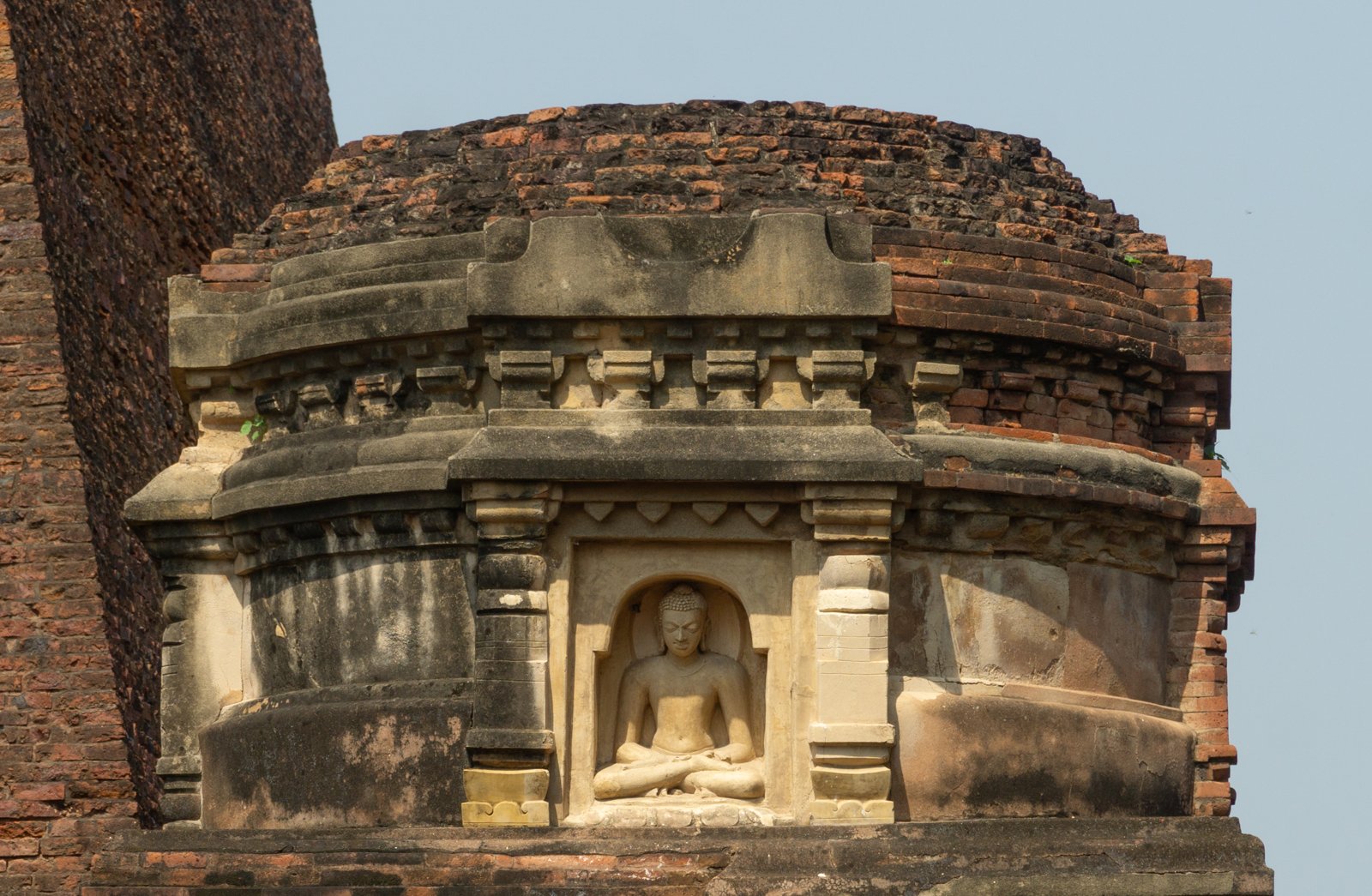
UNESCO’s account of Nalanda Mahavihara distinguishes the long archaeological history of the site from the major monastic-scholastic establishment that flourished between the fifth and thirteenth centuries CE. Its remains include residential monasteries, shrines, stupas and works of art. Successive building campaigns enlarged and altered the complex rather than simply preserving a single original plan.
An exact foundation day cannot be recovered from these materials. Royal patronage, especially under the Guptas and later the Palas, emerges from inscriptions and other evidence, but the literary traditions also incorporate sacred stories. The 2016 ICOMOS evaluation both describes the site’s development and questions easy claims about its identity as the earliest university. “University” is a useful modern shorthand for residential advanced learning; it can also encourage misleading comparisons with contemporary admissions offices, departments and degrees.
The term mahavihara, a great monastery, keeps its religious organization in view. Nalanda trained people within a Buddhist world of discipline, worship and philosophical argument. Its breadth of study is impressive without converting it into a secular modern institution before its time.
The visitor who made its reputation travel
Among the sources for the monastery, Xuanzang’s seventh-century account occupies an exceptional place. He came from Tang China seeking Buddhist texts and authoritative instruction, and returned in 645. His travels became a major description of Central and South Asian societies, compiled with the assistance of Bianji. The scholarly edition published by BDK emphasizes the range of that record: geography, government, customs and the condition of Buddhism.
At Nalanda, however, geography gives way to the reputation of a community. In Samuel Beal’s translation of Xuanzang’s account, successive rulers build monasteries, and a surrounding wall brings the establishments into a larger whole. Xuanzang praises the learning and discipline of several thousand monks. He describes discussion as demanding enough to defeat visitors whose reputations exceeded their understanding.
His most memorable detail concerns the gate. Those hoping to enter and participate in learned discussion could face difficult questions; many failed to satisfy the gatekeeper. That passage has often become a story about a standardized university entrance examination. The text supports something narrower and more interesting: participation in an eminent scholarly community could require demonstrating the knowledge necessary to argue within it.
Xuanzang also reports that Nalanda’s name was valuable enough for outsiders to claim an association they did not possess. The observation reveals an economy of reputation. A monk who had studied there could receive attention elsewhere before delivering a single argument. The institution’s standing traveled with people, sometimes more easily than the knowledge that supposedly justified it.
The historian Tansen Sen’s study of Chinese pilgrims’ records explains why such accounts require careful reading. Their authors sought religious instruction and wrote for particular audiences, including patrons and other monks. They combined observation with devotion and sometimes with diplomacy. Xuanzang’s admiration is evidence of Nalanda’s prestige, but it is not an impersonal administrative inspection.
A lesson was also a relationship
The monastery’s influence depended upon sustained contact between teachers and students. A manuscript could carry words, but difficult terminology, competing interpretations and the standards of a successful argument required explanation. Students needed enough linguistic and intellectual preparation to follow what a teacher was doing.
Xuanzang’s account presents a community in which discussions continued with great intensity. The insistence on demanding argument does not mean that doctrine was unimportant. Debate occurred because ideas about knowledge, causation, liberation and the nature of reality mattered profoundly. Scholars sought to understand and defend positions within a crowded intellectual landscape, including disagreement among Buddhists themselves.
A later Chinese visitor, Yijing, departed in 671 and returned to China in 695. His Record of the Inner Law describes monastic conduct across India and the southern seas. He wanted Chinese monks to learn from the practices he had encountered, so his writing is prescriptive as well as observational.
In the translated text, a pupil serves his teacher, learns new material and reviews earlier lessons; a teacher, in turn, cares for a sick pupil. Yijing also stresses Sanskrit grammar. These passages concern Indian monastic education more broadly and should not all be treated as a timetable unique to Nalanda. They nevertheless show the disciplined relationships within which advanced learning operated.
His report of more than three thousand resident monks conveys scale, not the precision of a modern census. Literary numbers cannot simply be fitted into the rooms visible today, which belong to different phases of a partly excavated institution.
The villages behind the manuscripts
The copper plate of Devapala exposes the economic underside of this scholarly life. A prestigious foreign foundation still needed a reliable local income. The ruler of Suvarnadvipa could sponsor a monastery; the Pala king could endow it with resources attached to villages under his authority.
The DHARMA project’s edition and translation of the inscription specifies a broad range of intended support: food, clothing, bedding, provision for medicines, religious offerings, writing sacred texts and repairing damaged structures. The list brings activities often separated in modern accounts into one institution. Copying and maintenance were both necessary conditions of continuity.
The date requires care. The National Museum catalogue reads the grant as Devapala’s thirty-ninth regnal year, while the DHARMA edition identifies year thirty-five. A precise conversion to a single CE year would conceal that difference. Its ninth-century setting is sufficient to establish the central point: Nalanda drew support from an international Buddhist constituency, expressed through a concrete land grant.
That constituency was not a modern international student body assembled through national quotas. Its connections followed rulers, teachers, pilgrims and travel routes. Someone arriving from overseas entered relationships already shaped by language, doctrinal interest, political protection and the practical possibility of reaching northern India.
Nor should royal generosity make the supporting countryside disappear. An endowment represented claims on productive resources. The people cultivating the villages seldom receive the attention given to the king named on the plate, but the monastery’s capacity to shelter full-time scholars depended on work beyond its walls.
Books that crossed the mountains
Five palm-leaf pages now in the Asia Society collection make the movement of learning tangible. Their painted figures interrupt carefully arranged writing; their long narrow format reflects the material on which the text was made. The museum’s collection record on Google Arts & Culture identifies them with Nalanda and the Pala period, and as leaves from the Ashtasahasrika Prajnaparamita, the Perfection of Wisdom in Eight Thousand Lines.
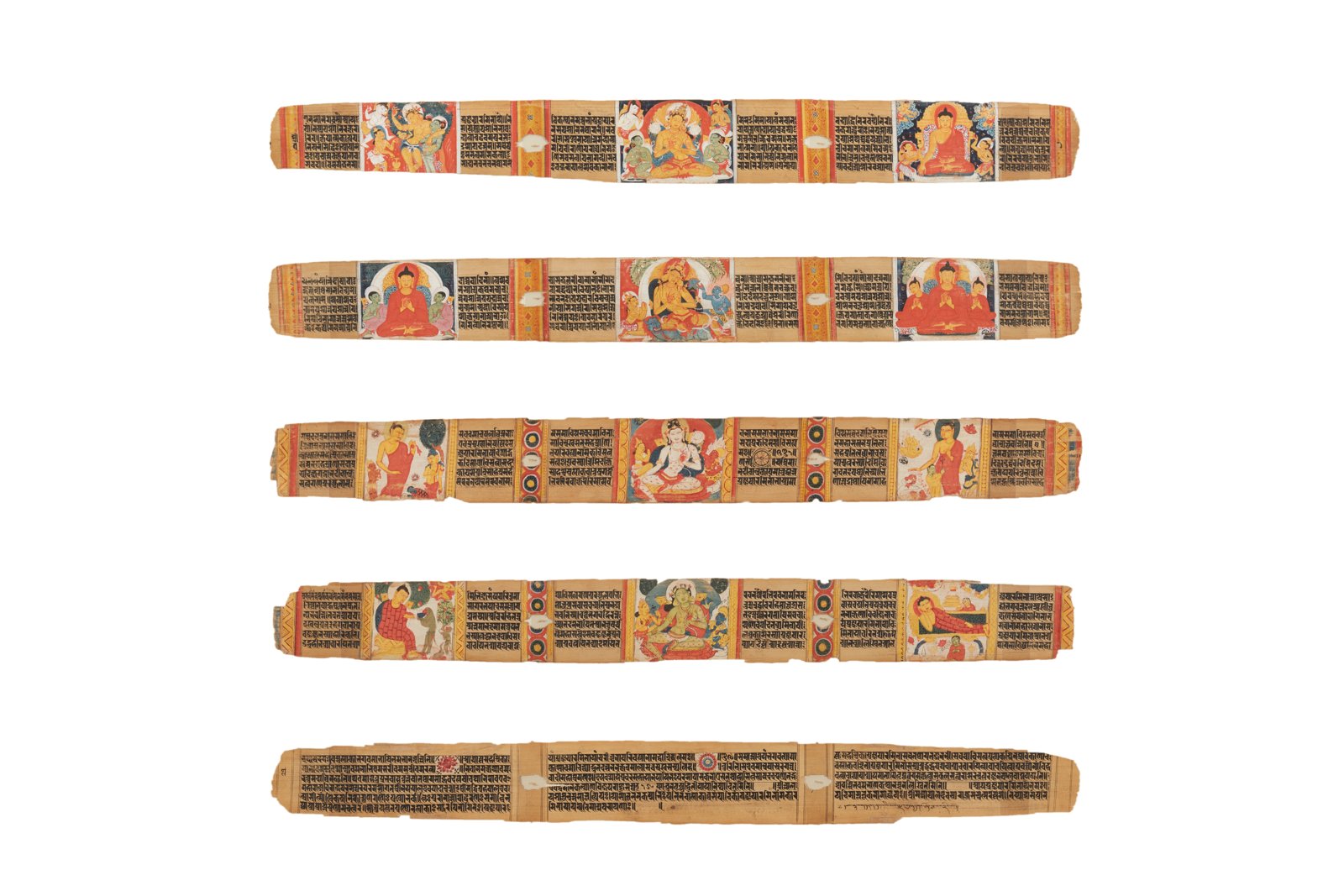
The object was more than a container for sentences. Writing, painting and religious use belonged together. The manuscript could serve study, devotion and the accumulation of merit while also preserving a text for later readers.
A scholarly presentation prepared for the Himalayan Art in 108 Objects project, by curator Elena Pakhoutova and book historian Agnieszka Helman-Ważny, follows this manuscript’s passage from an Indian monastery across the Himalayas with a Kashmiri master. The dates associated with its history include 1073 and 1151. Such objects show why manuscript history cannot be reduced to a single moment of production.
A book might be copied in one place, carried by a scholar, annotated or dedicated elsewhere and preserved by a community far from its makers. Its survival depended on many decisions across generations. What crossed a frontier was not simply a finished package of Indian learning. New custodians placed it within their own practices and intellectual projects.
This movement also changes the scale at which Nalanda should be understood. Its history extends beyond the area that an archaeological visitor can walk through. Some of its most consequential continuities were established precisely when a person or manuscript left.
Learning did not leave worship behind
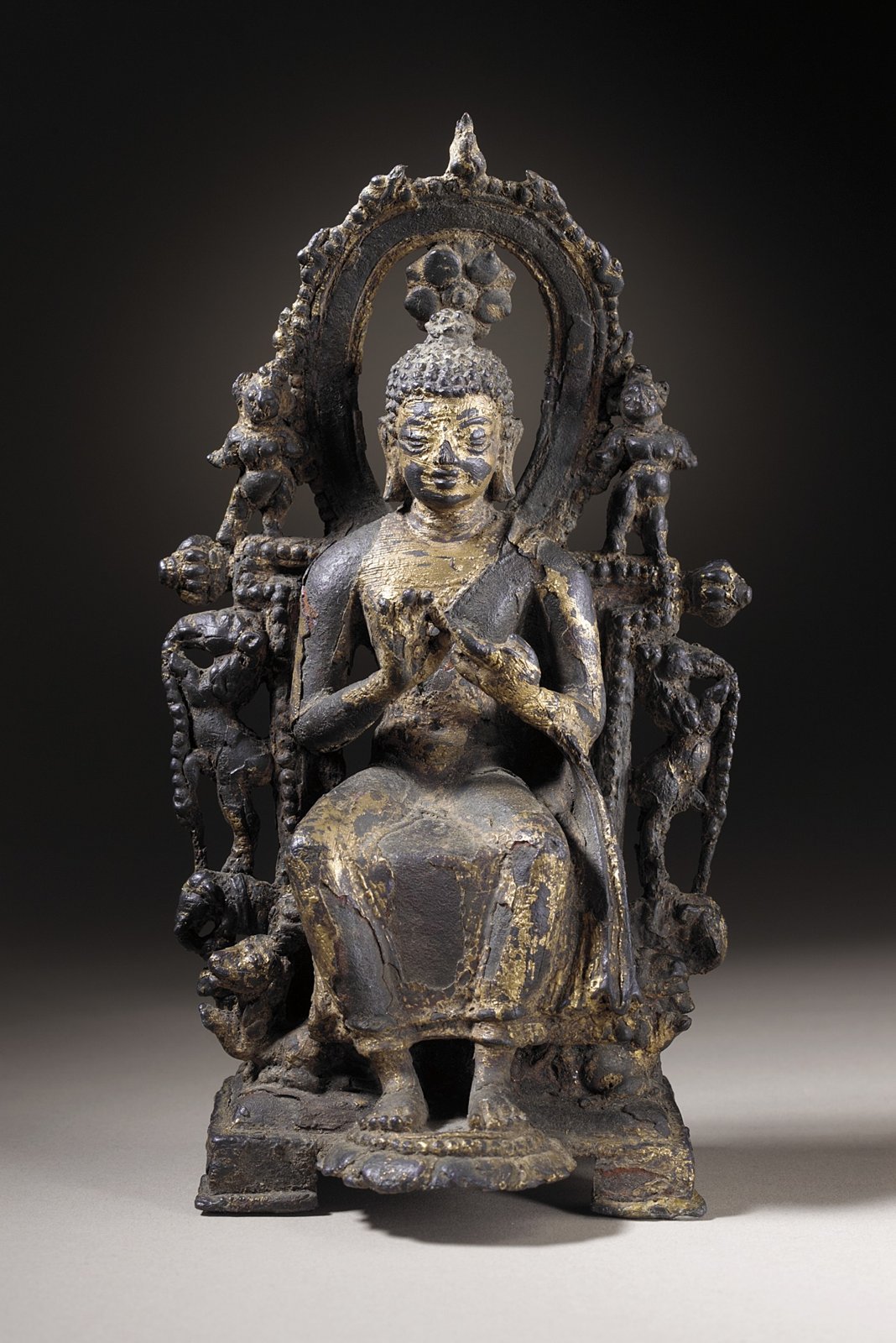
The surviving objects resist a division between an intellectually sophisticated monastery and a religious one. A small gilt copper-alloy figure associated with Nalanda, now at LACMA, is catalogued as either Buddha Shakyamuni or the Bodhisattva Maitreya. The uncertainty in that identification is worth retaining: an attractive illustration should not be made more definite than its evidence.
Inscriptions offer another route into religious practice. Gregory Schopen’s study of a tenth-century inscription from Nalanda identifies a verse from the Bhadracaripranidhana on the drum of a small stupa. The record includes a monk’s religious act for the benefit of his teacher. The relationship that sustained instruction could continue through commemorative devotion.
This is a different kind of testimony from the descriptions of famous visitors. It fixes a text and an act of dedication to a material object. Taken together, the sources reveal scholars who argued, copied, honored teachers and participated in ritual. Those activities were parts of a connected life.
The networks were larger than Nalanda
Connections with Tibet illustrate the same principle at institutional scale. The eighth-century thinker Shantarakshita helped establish monastic Buddhism and rigorous philosophical study there. The Stanford Encyclopedia of Philosophy’s account describes his work at Samye and his integration of several strands of Indian Buddhist reasoning. Traditions associated with great Indian teaching monasteries became resources for a new intellectual setting.
Nalanda should not receive exclusive credit for everything that later flourished in Tibet. Other monasteries, translators, patrons and indigenous thinkers were indispensable. Transmission was a network rather than a single line of descent. Tibetan scholars developed arguments and institutions of their own while preserving access to many Indian works.
The same caution applies to China. Nalanda’s influence operated through particular visitors and translation projects, not through the wholesale reproduction of one campus abroad. For the further story of one of those travelers, see Xuanzang’s long road home. His return made the skills and texts acquired on a long journey available to people who would never reach India.
A damaged institution, and a surviving connection
Nalanda’s final centuries are often compressed into one night of destruction. The evidence supports a more complicated account of violence, contraction and persistence. A particularly important witness is the Tibetan pilgrim Dharmasvamin, who visited India in 1234–1236.
His biography, translated by George Roerich, describes damaged buildings, a diminished community and the aged teacher Rahulasribhadra still giving instruction. It also recounts a threat of attack and the flight of monks. This is evidence for severe insecurity and for continued study after the date at which simplified retellings sometimes end Nalanda’s existence. It does not provide a dependable inventory of destroyed books or a measured duration for a library fire.
The distinction matters without making the losses smaller. Buildings, income and protection were conditions of scholarly life; disruption to any of them could weaken the whole. A surviving teacher and a small group of students could maintain a connection even when the institution around them was gravely reduced.
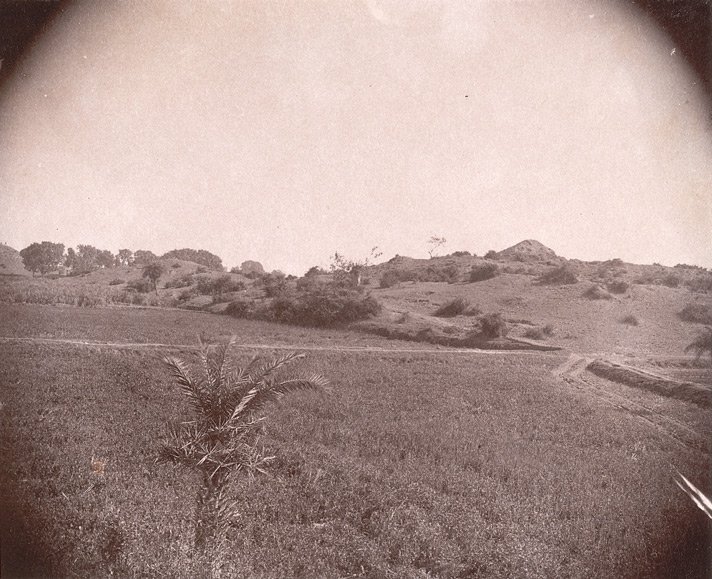
Archaeology later recovered another part of the story. Excavation exposed the brick remains, while conservation made them accessible and more stable. UNESCO’s 2018 conservation decision emphasizes the need to distinguish original archaeological material from later intervention. The ruins, like the written sources, require interpretation.
Nalanda’s achievement is not best measured by an unverified number of books or a claim to have invented the modern university. It lies in the durable relationships that made advanced learning possible: between teachers and pupils, monasteries and villages, patrons and scribes, travelers and hosts. Some of those relationships disappeared with the institution. Others carried its learning far beyond the surviving walls.
Sources and further reading
- National Museum in New Delhi’s catalogue
- UNESCO’s account of Nalanda Mahavihara
- 2016 ICOMOS evaluation
- scholarly edition published by BDK
- Samuel Beal’s translation of Xuanzang’s account
- study of Chinese pilgrims’ records
- Record of the Inner Law
- translated text
- DHARMA project's edition and translation of the inscription
- museum’s collection record on Google Arts & Culture
- scholarly presentation prepared for the Himalayan Art in 108 Objects project
- study of a tenth-century inscription from Nalanda
- Stanford Encyclopedia of Philosophy’s account
- biography, translated by George Roerich
- 2018 conservation decision