
Saratoga 1777: The Supply Lines Behind a Revolutionary Victory
Broken transport, protected depots, and hard fighting trapped Burgoyne’s army. Diplomacy turned its surrender into the French alliance.
On 17 October 1777, John Burgoyne met Horatio Gates at Saratoga to complete the surrender of a British-led army. The encounter became one of the American Revolution’s most frequently commemorated scenes. Its significance, however, lay in what the ceremony concluded: months of moving food, artillery, boats, horses, and people through a contested corridor, followed by the failure to move them any farther. Saratoga Surrender Site
The victory’s consequences then traveled across the Atlantic. News of the captured army helped bring France into a formal alliance with the United States. To understand why Saratoga mattered, it is necessary to connect those two movements: an army advancing toward Albany, and information reaching ministers in Paris. The fighting was decisive, but its stakes were shaped by transport, local mobilization, and diplomacy.
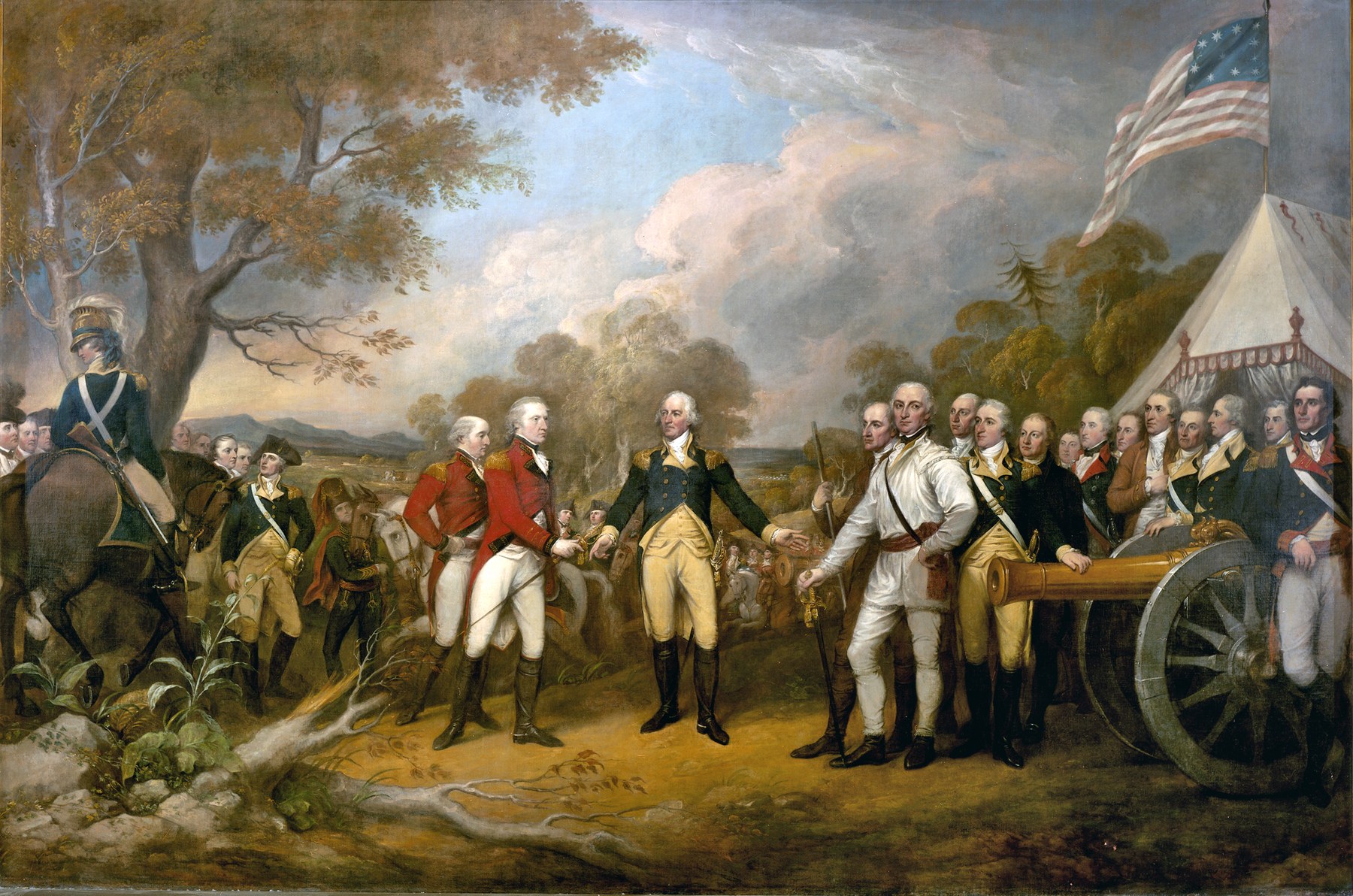
A corridor was easier to draw than to control
British strategy placed unusual importance on the route running from Canada through Lake Champlain toward the Hudson. Control of that corridor promised to interfere with communication between New England and the other rebellious states. Burgoyne’s northern army would push toward Albany; Barry St. Leger’s smaller expedition would approach through the Mohawk Valley. Forces based in New York City could potentially support the effort from the south. NPS campaign overview
The pieces never became a coordinated operation. William Howe pursued Philadelphia rather than advancing up the Hudson, while St. Leger’s expedition failed to take Fort Stanwix. Burgoyne’s army continued south without the convergence on which a successful campaign might depend. Calling this simply a perfect plan ruined by a missing general conceals the problem: geographically separate commands had to make compatible decisions and communicate them in time, while confronting different opponents.

Retreat could create work for the pursuer
The Americans’ evacuation of Ticonderoga in early July was a serious reverse. It also began a retreat in which Philip Schuyler sought to slow Burgoyne by altering the route ahead of him. Trees were felled, bridges destroyed, and creeks dammed to flood roads. Every obstruction required labor from the advancing force while giving its opponent time to regroup. The campaign timeline
A road blocked by timber was not an abstract obstacle on a map. Men had to clear it before vehicles could pass. Repairing a crossing could consume the effort of soldiers who would later be expected to fight. Schuyler lost command to Gates in August, but the sequence warns against crediting a victory entirely to the commander present at its end. The northern army’s final position was reached through earlier reverses, delaying measures, and rebuilding.
The cost of leaving the boats
Water transport initially carried Burgoyne’s supplies efficiently. The difficulty came where cargo had to leave boats and enter carts, then sometimes return to boats on another lake. Steven E. Clay’s Army University Press study describes the repeated handling required around Ticonderoga and Lake George. Such transfers required vehicles, draft animals, labor, and functioning approaches to the water. Staff Ride Handbook, pp. 52–55
Clay records an order for 500 light Canadian-style carts, but emphasizes their limited capacity and their tendency to break down when built from unseasoned timber. Horses introduced another demand: animals that carried the army’s supplies also had to be fed. Shortages of usable carts and teams therefore reduced what the army could move even when supplies existed farther back. Burgoyne’s burden was not adequately explained by stories about an extravagant commander’s luggage. It was a transport system in which successive stages constrained the whole.
Bennington made scarcity worse
The expedition sent toward Bennington in August was an attempt to acquire supplies and horses. Instead, it exposed a separated part of Burgoyne’s force to locally assembled resistance. The battle usually named for Bennington was fought at Walloomsac in New York on 16 August, in two connected engagements. Militia from New Hampshire, Massachusetts, and Vermont defeated German troops and other Crown auxiliaries. Bennington Battlefield State Historic Site
The result mattered beyond the prisoners and casualties. Burgoyne had risked men to improve his army’s material position and emerged weaker. American forces had protected a supply center and demonstrated their ability to concentrate against a detachment. The episode joined military action to local knowledge and provisioning. It also illustrates a recurring dilemma of armies dependent on foraging: sending out a stronger party removes more men from the main force, while sending too few exposes them to defeat.

Bemis Heights closed the convenient route
At Bemis Heights, Gates’s army occupied ground that made the road and the Hudson dangerous to an approaching enemy. The bluffs rose above a narrow floodplain; defenses below obstructed the road, while works and artillery above protected them. Tadeusz Kościuszko’s engineering helped turn the terrain into a connected defensive position. Burgoyne could not simply continue downstream past it with his train of supplies. The American river defenses
The position forced choices about where an attack might be attempted and how troops could move away from the river. Its strength came from the combination of landform, construction, guns, and men. A steep bank by itself did not defeat an army. Soldiers had to occupy the works, provide information about the approach, and hold the position while the enemy searched for an opening.
Two armies contained many communities
Burgoyne’s force was often called British, but important contingents came from Brunswick and Hesse-Hanau. These were German states in an era before a unified Germany. Their rulers supplied organized military units under agreements with Britain. The men should not all be imagined as individuals freely selling their services to the highest bidder; their deployment followed the obligations of the forces in which they served. The Germans at Saratoga
Armies also contained people absent from lists of combatants. Women worked as nurses, laundresses, seamstresses, and sellers of provisions; children traveled with families. Such followers faced the same shortages, exposed camps, and dangerous movements as the soldiers. Their presence was part of the army’s functioning social world rather than an incidental crowd appearing only when something went wrong. Women and children following the armies
At the smallest scale, soldiers organized much of their life in a mess. The NPS describes groups of five or six sharing a wedge tent and an iron cooking kettle, and dividing the carrying of their equipment on the march. That simple arrangement connected transport to everyday survival. Rations still needed preparation, shelter still needed moving, and the loss or exhaustion of a few men changed the work remaining for the others. Behind British Lines
Holding the field did not open the road
The first major battle at Saratoga, at Freeman’s Farm on 19 September, ended with Burgoyne’s forces holding the battlefield. In that immediate sense it was a British tactical victory. Yet the Americans still blocked the route south, while the attackers had suffered nearly 600 casualties. The distinction between occupying the field and achieving the campaign’s purpose is essential. The Battle of Freeman’s Farm
The same account undermines a familiar image of rigid Europeans helpless before Americans hiding behind trees. Both sides fought in woods and open ground. German reinforcements helped determine the day’s outcome, while Daniel Morgan’s riflemen were only one part of the American force. Combat depended on formed units, artillery, reserves, and coordination as well as marksmanship. Burgoyne had won possession of ground without solving the larger problem of maintaining and advancing his army.
Intelligence was another kind of supply
Indigenous participation cannot be reduced to a single side. The war divided the Haudenosaunee Confederacy, and Oneida and Tuscarora support assisted the Americans. Their service included scouting, carrying information, and other tasks that made distant events usable to commanders. The NPS history of Oneida participation also records the consequences of the conflict for their own communities. The Oneida in the American Revolution
This work belongs in the explanation of Saratoga alongside ammunition and food. An army needed to know where an opponent was moving, which route remained open, and whether reinforcements were approaching. Local alliances helped produce that knowledge. They did not make the Revolution a simple conflict between an invading force and an undivided local population: Loyalists, Patriots, and Indigenous nations were pursuing choices whose costs extended well beyond the battlefield.
The second battle began beside wheat
By early October, dwindling food, desertion, approaching cold, and aggressive American activity narrowed Burgoyne’s options. On 7 October he sent out a substantial reconnaissance force. It paused beside wheatfields while foragers gathered grain. Military reconnaissance and the search for food were thus part of the same movement. American attacks turned it into the second battle of Saratoga. The Battle of Bemus Heights
The fighting ended in a clear American victory. The loss of the position commanded by Heinrich Breymann compromised the British camp’s northwestern defenses, and Burgoyne withdrew his troops closer to the Hudson. His subsequent retreat north failed to restore freedom of movement. The army was hemmed in, food was nearly exhausted, and American strength continued to make escape difficult. The surrender on 17 October followed that operational collapse, rather than a single dramatic encounter between two commanders.
A convention did not mean a quick journey home
Burgoyne and Gates negotiated an agreement intended to allow the defeated soldiers to leave North America under restrictions on future service. The resulting force became known as the Convention Army. Congress did not allow the planned departure to proceed, and the soldiers and accompanying families faced prolonged detention and repeated relocation. The Convention Army’s later history
This aftermath complicates the ceremonial image of magnanimous officers meeting politely. The surrender created responsibility for thousands of people who still required food, shelter, guards, and transport. Captivity dispersed the consequences of Saratoga into other communities for years. An army ceased to be an effective fighting force without ceasing to exist as a large group of human beings whom somebody had to sustain.
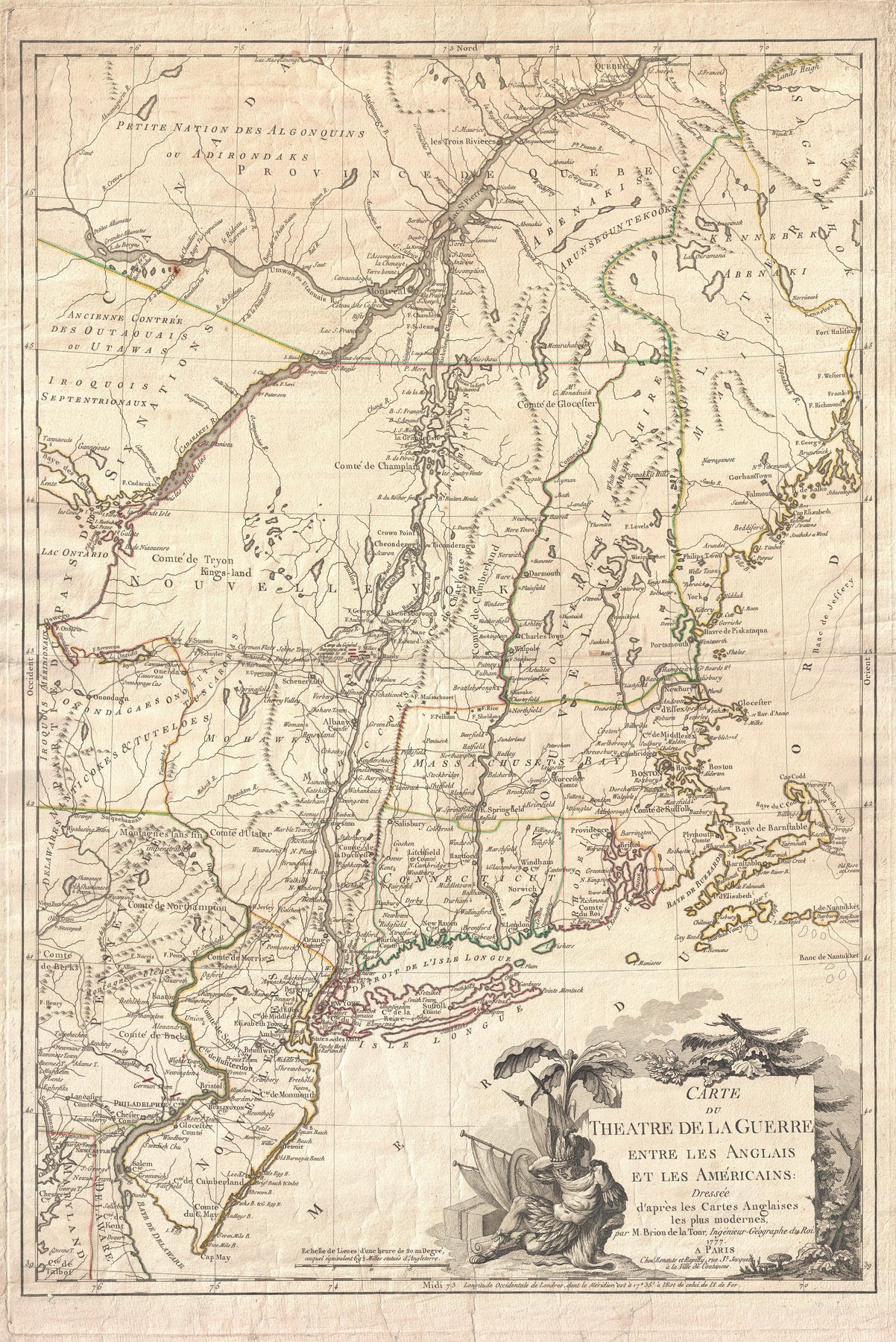
Why Paris heard more than good news
French aid did not begin after Saratoga. France had already provided covert assistance, and American commissioners had been seeking diplomatic recognition. Foreign Minister Vergennes nevertheless weighed the danger of a wider war, the Americans’ ability to continue fighting, and Spain’s position. When news of Burgoyne’s surrender reached France in December 1777, it altered those calculations. Concern that Britain might reconcile with the Americans added urgency. Office of the Historian, French alliance
Benjamin Franklin’s delegation had helped keep the American cause before the French government and public. The National Archives’ account emphasizes that recognition had remained uncertain despite his reputation. Saratoga supplied a concrete military achievement that diplomacy could use. An entire British-led army had been compelled to capitulate; the rebellion had shown a capacity to survive reverses and achieve a major result. The Treaty of Alliance with France
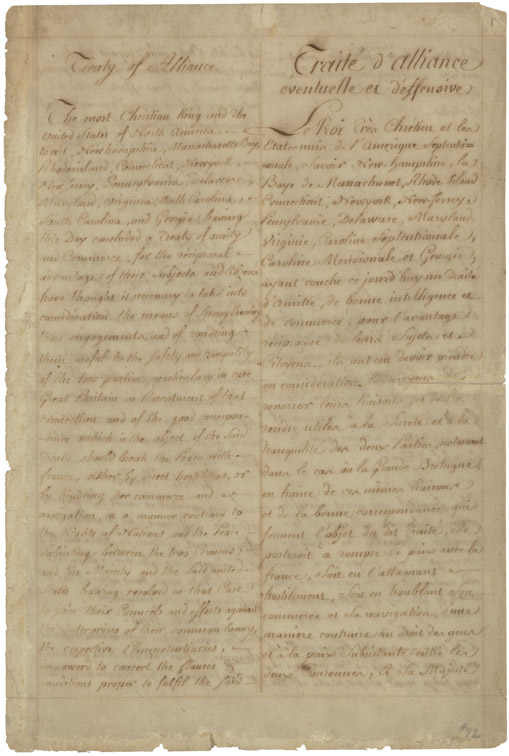
A victory became a set of obligations
On 6 February 1778, the two countries signed treaties of alliance and of amity and commerce. The alliance’s surviving text defined American independence as its central objective, required cooperation against the common enemy if war broke out between France and Britain, and prohibited a separate peace without the other party’s consent. Particular joint enterprises would require arrangements about the kind and timing of assistance. Treaty of Alliance, original text
These provisions show why an alliance was more consequential than applause for a victory. It committed states to coordinate war and peace. France’s subsequent military and naval assistance would help bring the conflict to its later conclusion, but Saratoga did not make that conclusion automatic. It created a stronger basis for an international partnership, with negotiations and campaigns still ahead.
The route from the Hudson to Paris therefore ran through material facts: damaged roads, inadequate carts, protected depots, fortified heights, intelligence, combat losses, and a captured army. Saratoga’s importance becomes clearer when those elements remain in view. The surrender ceremony marked their culmination; the French treaties converted the resulting military evidence into a new diplomatic and strategic situation.
Sources and further reading
- National Park Service, Saratoga Surrender Site
- National Park Service, Burgoyne’s Campaign: June–October 1777
- National Park Service, Campaign Timeline
- Steven E. Clay, Staff Ride Handbook for the Saratoga Campaign (Combat Studies Institute Press, 2018), pp.52–55
- New York State Parks, Bennington Battlefield State Historic Site
- National Park Service, Tour Stop 3: Bemus Heights
- National Park Service, The Germans at Saratoga
- National Park Service, Followers
- National Park Service, Tour Stop 8: Behind British Lines
- National Park Service, Battle of Freeman’s Farm
- National Park Service, The Oneida in the American Revolution
- National Park Service, Battle of Bemus Heights
- National Park Service, Soldiers with No Weapons: Remembering the Convention Army
- U.S. Department of State, French Alliance, French Assistance, and European Diplomacy during the American Revolution
- National Archives, The Treaty of Alliance with France, Prologue (2003)
- National Archives, Treaty of Alliance with France (1778), transcription
- National Park Service, The Archaeology of the Barber Wheatfield