
Ancient Rome · Origins, institutions, and conflict
The Birth of the Roman Republic
How Romans remembered the end of kingship, how shared government developed, and why freedom in Rome never meant equality for everyone.
New to the subject? Start with our beginner’s guide to the Roman Republic.

Chapter I
A city between archaeology and legend
Before Rome dominated the Mediterranean, communities occupied hills above the Tiber. The river crossing connected routes through central Italy, while the valley between the hills gradually became a shared civic space. The city’s growth was a long process, not an event that archaeology can assign to one founder or one morning.
Roman tradition nevertheless supplied a memorable beginning: Romulus founded Rome in 753 BC after the death of his twin, Remus. Six kings supposedly followed him. Numa Pompilius represented religious order; Servius Tullius was credited with the census and the organization of citizens by wealth. These stories explained institutions through exemplary individuals. They are indispensable evidence for Roman memory, but they are not contemporary reports of eighth- or sixth-century events.
The gap between events and surviving narratives matters. Livy wrote in the late first century BC, roughly five hundred years after the traditional expulsion of the kings. Earlier Roman historians also worked centuries after the events. Family traditions, civic monuments, records, folklore, and later political disputes all shaped the history they transmitted. As historian Stephen Oakley explains, the evidence for early Rome requires particular caution.
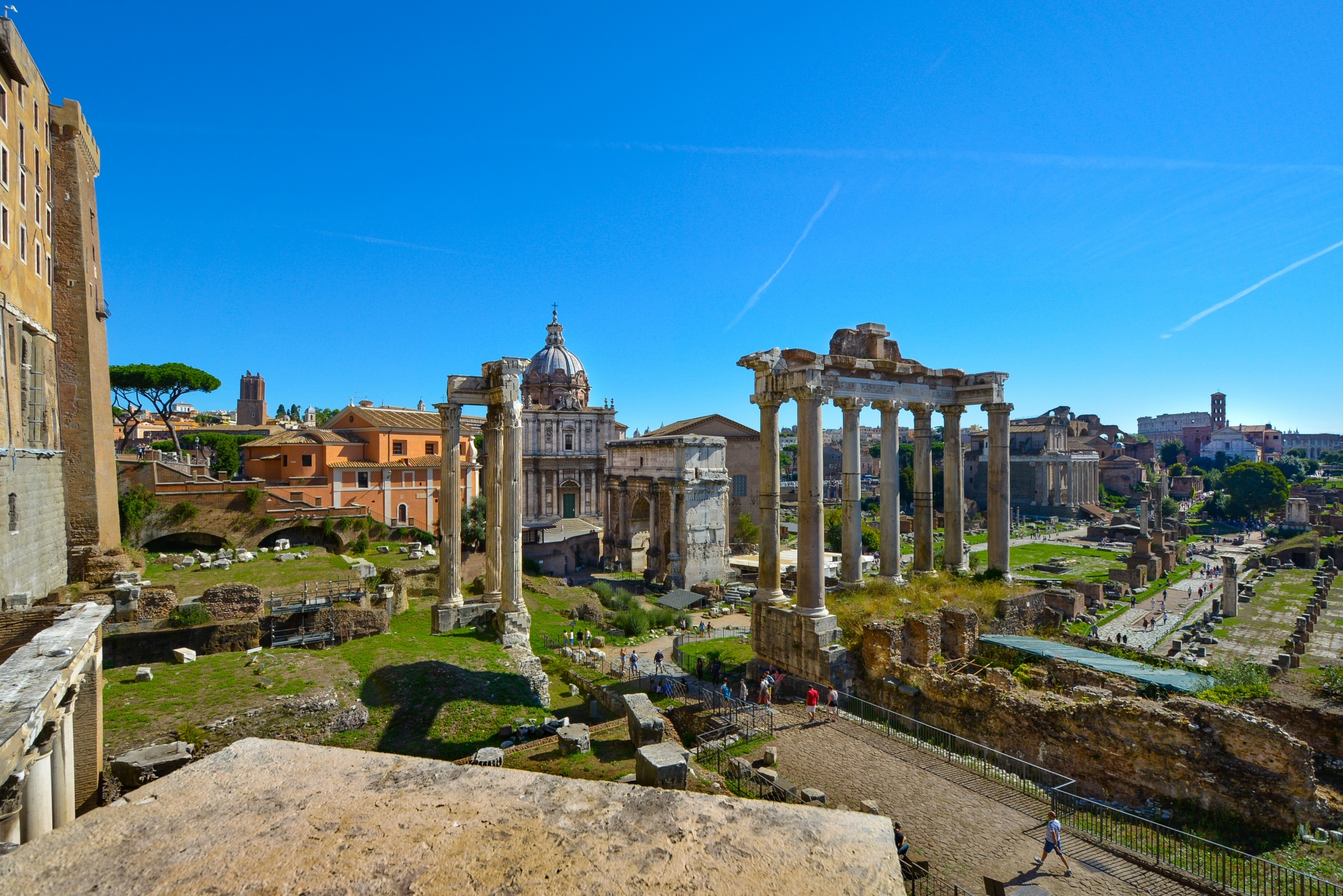
Archaeology provides a different kind of information. Monumental buildings, drainage, burials, inscriptions, and imported objects reveal an increasingly organized and connected city. The Forum’s development began in the late seventh century BC. Latin, Etruscan, and Greek influences met in Rome’s religious practices, architecture, and material culture. This was no isolated village suddenly discovering politics.
Later accounts describe kings who commanded armies, judged disputes, and performed religious duties, advised by leading men. Some form of kingship is historically credible; the biographies and precise reigns of the conventional seven kings are much less secure. Rome was also not uniquely surrounded by monarchies: Greek communities experimented with aristocracies, tyrannies, and citizen government. Rome’s significance lies in its particular institutional development, not in inventing every alternative to royal rule.
Chapter II
Tarquin the Proud and the story of Lucretia
Lucius Tarquinius Superbus, conventionally Rome’s last king, became the villain of the Republic’s origin story. His epithet, “the Proud,” captures the character later writers assigned him. Livy describes a ruler who seized power violently, neglected consultation, intimidated leading families, and demanded exhausting public labor. This is a portrait of tyranny shaped by republican ideas about proper leadership.
That portrait does not make every detail demonstrable. Stories of murdered opponents, palace conspiracies, and the king’s arrogance belong to a literary tradition that contrasts lawful authority with domination. They tell us what later Romans feared in a ruler, even where the events behind them cannot be independently reconstructed. The distinction is especially important when vivid ancient speeches sound like transcripts: they were literary compositions.
Roman tradition also associated the Tarquins with ambitious building and military activity. The great temple of Jupiter on the Capitoline, dedicated at the beginning of the Republic according to the traditional chronology, linked the city’s sacred center to the preceding royal age. Such continuities complicate a simple story in which everything Roman began only after the king disappeared.
A political story built around violence against a woman
In Livy’s account, the decisive outrage was the rape of Lucretia by Sextus Tarquinius, the king’s son. Lucretia summoned her husband, Collatinus, and her father, told them what had happened, and died by suicide. Brutus then turned the family’s grief and anger against the royal house.
Ancient authors framed her death through ideals of female chastity, family reputation, and male civic duty. Those ideals should be examined rather than repeated as an endorsement. Lucretia was not responsible for the assault, and her death was not necessary to restore any lost worth. Calling her suicide a victory over “dishonor” would reproduce the coercive moral assumptions of the narrative instead of explaining them.
The story made royal abuse personal and recognizable. A ruling family’s access to power appeared to place other households at its mercy. Yet it also reveals whose voices survive: Lucretia’s experience reaches us through male authors writing much later, while men convert her suffering into a foundation story for their political order. That tension belongs at the center of a careful reading.
Chapter III
The revolution of 509 BC, as Romans remembered it
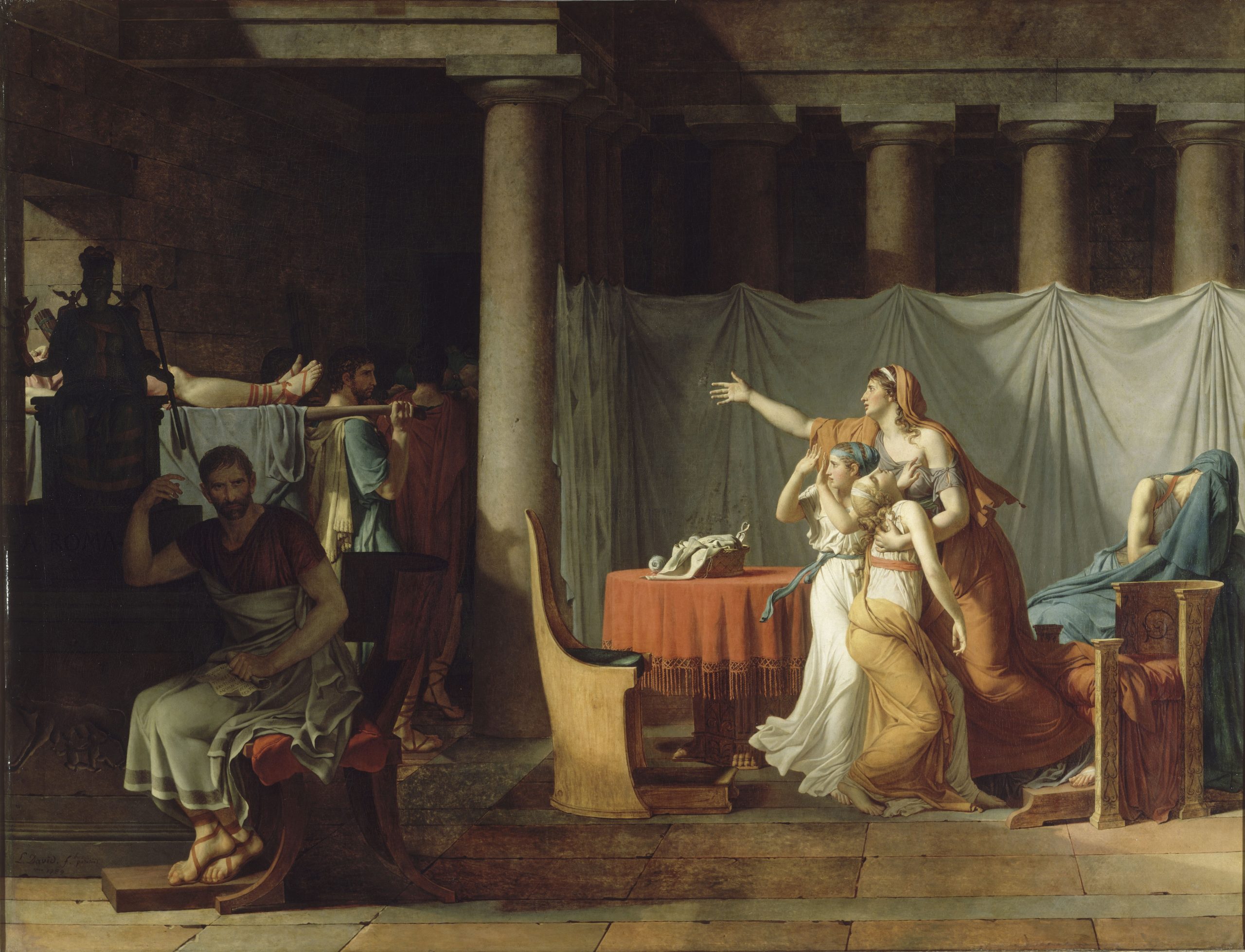
Lucius Junius Brutus is the leading figure in the traditional overthrow. Livy says he had concealed his intelligence to survive the king’s suspicions. After Lucretia’s death, he swore to oppose the Tarquins and any future king. The narrative transforms apparent weakness into political resolve.
Its geography is worth getting right. In Livy, Book 1, chapter 59, Lucretia’s body is first brought into the forum at Collatia. Brutus then leads supporters to Rome, where he addresses the people. The two scenes should not be collapsed into an assertion that her body was displayed in the Roman Forum.
According to the story, Tarquin was away with the army when Rome rejected his rule. The royal family was expelled, and Brutus and Collatinus became the first consuls. Later Romans treated this as the moment when civic liberty replaced kingship. The title rex, or king, consequently carried a powerful political stigma, although royal language remained in certain religious offices.
The new order did not emerge into peace. Traditions describe royalist conspiracies, warfare with neighboring communities, and the intervention of the Etruscan ruler Lars Porsenna. Horatius defending the bridge became one of Rome’s celebrated heroic episodes. The sources disagree about aspects of this period, including the extent of Porsenna’s success. These stories cannot simply be presented as a documented sequence of battles.
Modern scholarship also questions whether two annually elected consuls immediately replaced every aspect of royal government. The names, duties, and arrangement of early magistracies may have developed through stages. The evidence and competing models for early Roman politics leave room for disagreement. A recognizable republican system was an achievement of generations, not necessarily a constitution designed at one meeting.
The principal figures in the tradition
- Lucius Junius Brutus
- Leader of the overthrow and one of the first consuls in Roman memory. The story that he condemned his sons for a royalist conspiracy dramatized a disturbing conflict between family loyalty and public duty.
- Lucretia
- An aristocratic woman whose assault and death became the founding narrative’s moral crisis. Her symbolic role is central, but the surviving account should not be mistaken for access to her own voice.
- Lucius Tarquinius Collatinus
- Lucretia’s husband and Brutus’s first colleague in the consulship. Tradition says his connection with the Tarquin name prompted his resignation, demonstrating the new regime’s suspicion of royal associations.
- Publius Valerius Publicola
- A leading early consul credited with measures limiting arbitrary official power, especially the citizen’s appeal, provocatio. The historical development of those protections was more complicated than a single founding law.

Chapter IV
Building a republic: the architecture of shared power
The developed Republic distributed authority among magistrates, the Senate, and citizen assemblies. Romans did not place these arrangements in one supreme written constitution. Statutes, religious practice, inherited custom, and precedents worked together, often contentiously. The result changed over centuries and cannot be projected wholesale back into 509 BC.
Consuls: shared command, limited terms
Two consuls normally held the highest regular magistracy for a year. Their imperium included military command and coercive authority. They convened the Senate and assemblies and played leading roles in public business. Election, annual tenure, and the existence of a colleague constrained personal power without eliminating it.
A colleague’s intervention could obstruct action, but cooperation was not automatic and mutual checks were not foolproof. Consuls might operate in different regions or divide responsibilities. Commands could continue after a magistrate’s term through prorogation, so it is misleading to say that every consul invariably surrendered all public authority after twelve months. Accountability also depended on political circumstances, not simply a reliable clockwork of prosecution.
Other offices spread the work further. Praetors exercised jurisdiction and military commands; quaestors handled financial duties; aediles managed aspects of urban administration. Censors, elected at intervals, conducted the census and supervised senatorial membership. In emergencies, traditional dictatorship concentrated exceptional powers temporarily. None of these arrangements should be treated as identical to a modern president, cabinet, or court.
The Senate: authority, experience, and elite continuity
The Senate supplied continuity across changing officeholders. By the middle and late Republic it consisted largely of men who had held magistracies. Senators advised on finance, diplomacy, religion, provincial assignments, and military policy. Membership was normally enduring but was subject to censorial review, and the body’s size increased substantially in the final century BC.
A senatus consultum was a senatorial resolution, not a statute enacted by the people. Its practical force could nevertheless be considerable because magistrates belonged to the same competitive governing class and depended on its cooperation. The Senate’s influence must be distinguished from an unrestricted legal power to legislate. It neither represented every Roman equally nor invariably controlled every ambitious commander.
Assemblies: real participation, unequal influence
Citizen bodies elected magistrates, passed laws, and exercised certain judicial functions. The centuriate assembly organized voting through units connected with wealth and military classification, giving richer citizens disproportionate influence. The tribal assembly voted by tribes. The plebeian council, presided over by tribunes, excluded patricians and developed a central role in legislation.
Citizens voted on proposals put to them; the assemblies were not modern parliamentary debating chambers. Attendance required being present in Rome, an increasing obstacle as citizenship spread across Italy. Wealth, patronage, prestige, and the ability to organize supporters affected political participation. Women could possess Roman citizenship but could not vote or hold magistracies; enslaved people were excluded from citizenship and political rights.
The Greek historian Polybius, writing in the second century BC, analyzed Rome as a mixture of monarchical, aristocratic, and popular elements. His interpretation remains valuable, but it describes a much later Republic than Brutus’s supposed generation. Modern historians continue to debate how democratic, oligarchic, or negotiable its politics really were.
The fasces: authority made visible
Attendants called lictors carried the fasces, bundles of rods associated with a magistrate’s coercive powers. An axe could signify capital authority. In the familiar republican convention, axes were removed within the city, reflecting limits on ordinary magistrates’ power over citizens. The symbol reminds us that republican liberty coexisted with punishment and command; its rods cannot simply be read as a timeless slogan about democratic unity.

Chapter V
A republic for whom? The struggle of the orders
The end of monarchy did not establish social equality. Patrician families enjoyed inherited prestige and privileged access to important offices and priesthoods. Plebeians were citizens outside that patrician order. They included prosperous landowners as well as people struggling with debt, so “patrician” and “plebeian” should not be translated simply as rich and poor.
Later Roman histories organized early republican conflict around the struggle of these orders. Plebeian soldiers and citizens demanded protection from coercion, relief from economic pressure, and access to office. Their interests overlapped without always coinciding: a wealthy plebeian’s desire for a consulship differed from a debtor’s need to avoid ruin.
The traditional first secession of the plebs, dated to 494 BC, made collective withdrawal the decisive bargaining tool. Its detailed narrative is disputed, but the institution associated with it, the tribunate of the plebs, became fundamental. Tribunes offered protection against official action, could intervene politically, and convened the plebeian council. Their authority and number developed over time.
The Twelve Tables: public law, not equal society
A central milestone was the Twelve Tables, conventionally dated to 451–450 BC. A commission of ten men, the decemviri, was credited with setting out laws publicly. The original tablets do not survive; their provisions are reconstructed from quotations and discussion by later writers. A modern image of “the Twelve Tables” is therefore a reconstruction or artistic interpretation, not a photograph of an intact original code.
The surviving legal fragments concern procedure, debt, property, family authority, injuries, and burial, among other matters. Making rules public could constrain arbitrary claims and provide a shared point of reference. It did not remove inequality, make every dispute predictable, or eliminate the need for expert interpretation. Some provisions reinforced severe social and familial hierarchies.
Access to office broadened through further conflict and compromise. The Canuleian law traditionally dated to 445 BC permitted marriage between the orders. The reforms associated with Licinius and Sextius in 367 BC opened the way to plebeian participation in the consulship; Lucius Sextius held it in 366. The regular sharing of office emerged through subsequent struggles, not an instantly settled rule followed without exception from 367.
In 287 BC the Hortensian law made plebeian resolutions binding on the whole citizen body without the earlier restrictions. This is a conventional endpoint for the struggle of the orders, not for conflict over wealth and power. Successful plebeian families joined patricians in a new governing nobility. Broader elite access and genuine citizen protections could coexist with deep inequality.
Key milestones in the traditional chronology
- 509 BC: expulsion of Tarquin and the first consuls in Rome’s foundation narrative
- Late sixth century BC: warfare associated with Porsenna; heroic accounts such as Horatius at the bridge mix memory and legend
- 494 BC: traditional first plebeian secession and beginnings of the tribunate
- 451–450 BC: compilation of the Twelve Tables
- 445 BC: the Canuleian law on marriage between patricians and plebeians
- 367–366 BC: reforms associated with Licinius and Sextius, followed by Sextius’s consulship
- 287 BC: the Hortensian law and the authority of plebeian resolutions
Chapter VI
Expansion, collapse, and a contested legacy
Over several centuries, Rome extended its power across Italy and much of the Mediterranean. Alliances, colonies, war, and different grades of legal status connected communities to the Roman state. Victory over Carthage and expansion into the eastern Mediterranean transformed the scale of republican politics. The Republic acquired an empire before Rome acquired emperors.
That empire should not be confused with the later Empire at its greatest extent. Caesar campaigned in Britain, but its lasting provincial conquest began under Claudius in AD 43. Mesopotamian conquests associated with Trajan came later still. Describing the Republic as governing continuously from Britain to Mesopotamia transfers imperial achievements into the wrong period.
Expansion brought wealth and opportunity, but their distribution was uneven. Competition over land, resources, citizenship, and commands intensified. Allied Italians supplied military manpower without enjoying the same political status as Roman citizens; the Social War of 91–88 BC was followed by a major extension of citizenship in Italy. The state adapted, sometimes dramatically, rather than remaining a frozen sixth-century constitution.
No single cause explains its eventual breakdown. Elite competition, political violence, disputes over reform, exceptional commands, and soldiers’ ties to commanders interacted. Sulla’s seizure of power and dictatorship, Caesar’s civil war and dictatorship, his assassination in 44 BC, and subsequent wars progressively undermined competitive government. Calling this simply the unavoidable weight of success obscures choices, resistance, and failed opportunities for compromise.
Octavian defeated Antony and Cleopatra at Actium in 31 BC and secured Egypt in 30. The settlement of 27 BC, when he received the title Augustus, is the conventional beginning of the Principate. Offices and the Senate survived, while military resources and decisive authority were concentrated around one ruler. The Metropolitan Museum’s account of Augustus explains how claims of republican restoration accompanied the emergence of autocratic rule.
Why the Republic still matters
Roman writers supplied later readers with a rich vocabulary of public duty, law, liberty, and civic conflict. Res publica means public affairs or the commonwealth; it was not always a precise label for a constitution without a monarch. Renaissance and later republican thinkers drew selectively on Roman examples, while the American founders combined classical reading with many other political traditions.
Rome was influential, but modern representative democracy did not flow directly from one revolution in 509 BC. Roman assemblies practiced direct voting, citizenship was restricted, and slavery was fundamental to society. Its institutions are best studied both for their capacity to accommodate conflict and for the exclusions they preserved.
SPQR expressed the association of Senate and Roman people, yet emperors also used it. Political language can outlive the distribution of power it appears to describe. That is a more revealing ending than treating the letters as proof that sovereignty belonged equally to every resident.
The Republic’s birth therefore raises two enduring historical questions: how did Romans restrain leaders without abolishing command, and who counted among the people entitled to those restraints? The answers changed over time. Following those changes makes the Republic more understandable, and more interesting, than either an uncomplicated triumph of freedom or a system doomed from its beginning.