
Histovia · World War II · Maritime history
Why May 1943 Turned the Battle of the Atlantic
The decisive change came when aircraft, escorts, intelligence and training began to work together. The result was measured in ships reaching port as well as submarines sunk.
By Histovia Team
The battle around convoy ONS 5 in early May 1943 did not begin as an obvious Allied success. German submarines found the merchant ships, weather complicated protection, and repeated attacks took a heavy toll. Then the balance changed. Escorts frustrated further approaches and inflicted losses on the attackers. A convoy that had suffered badly became part of the evidence that the German offensive was reaching its limits.
By 24 May, Admiral Karl Dönitz had ordered a temporary withdrawal from the North Atlantic convoy routes. What happened between the alarming losses of March and that decision is often reduced to a technological breakthrough or the cracking of a code. The fuller explanation is more useful. Several capabilities became effective in combination, and their value depended on people being able to coordinate them across an enormous and hostile ocean.

The task behind the battle
The convoy’s destination mattered more than the escort’s score
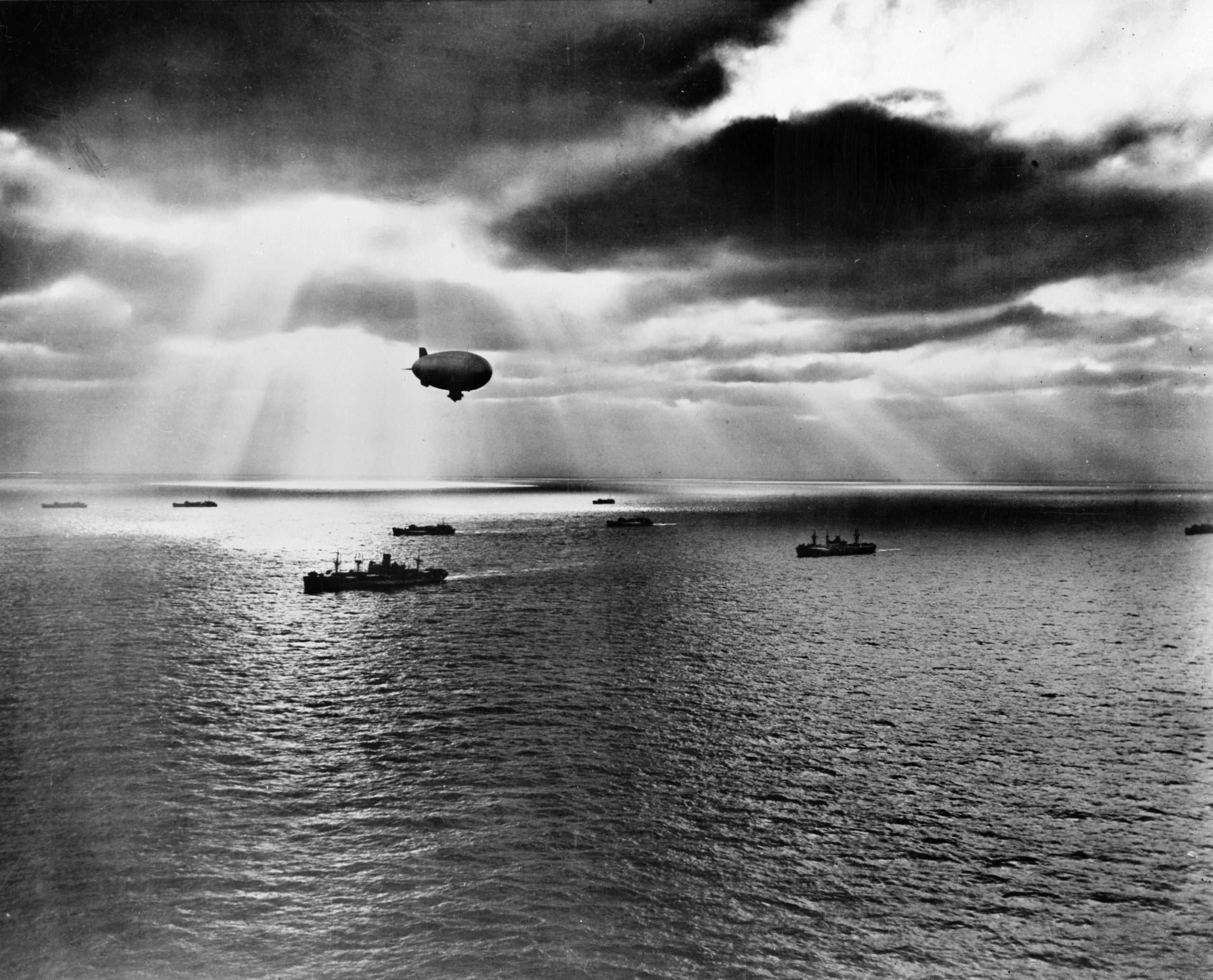
The Battle of the Atlantic was a struggle over movement. Britain needed food, fuel, raw materials and military supplies; Allied operations depended on troops and equipment crossing the sea. The Royal Canadian Navy’s overview and Veterans Affairs Canada’s campaign history place the merchant marine alongside the naval and air forces in this effort. Merchant crews were doing the work whose completion made the campaign strategically worthwhile.
A convoy concentrated limited escorts around a group of ships. It did not make the ocean safe everywhere. The protection depended on maintaining formation, locating danger and keeping attackers away long enough for the merchant vessels to pass. Bad weather, stragglers and rescue operations could strain that protection.
This gives us two different measures of success. Destroying a U-boat reduced the enemy’s future strength. Preventing an attack could save ships immediately even when the submarine escaped. An escort or aircraft that forced a boat away from a convoy might accomplish its main task without producing a dramatic sinking photograph.
Supply was also a home-front story. Britain’s wartime food system had to make the most of cargo space and uncertain imports, a connection explored in Histovia’s history of wartime and postwar rationing. The consequences of an Atlantic crossing reached far beyond a naval operations room.
A crisis before the reversal
March showed how dangerous a concentrated submarine attack could be
By early 1943, the Germans were concentrating large numbers of submarines against the North Atlantic routes. Boats could spread out to find a convoy, report its position and draw others toward it. The system depended on locating shipping and maintaining contact long enough to assemble attackers.
The U.S. Navy’s Antisubmarine Warfare in World War II describes successive convoy battles in March, including attacks on HX 229 and SC 122. It also warns against reading monthly losses without examining their causes. More shipping could be lost because more convoys came under attack, rather than because escorts had suddenly become less useful.
Weather further complicates a simple rising-and-falling chart. It could scatter merchant ships and hinder refuelling or aircraft, but it could also make submarines less effective. A quiet month did not necessarily mean the underlying threat had disappeared. Commanders had to judge whether the system could withstand attacks under favorable conditions for the enemy.
ONS 5 made that test brutally concrete. According to the operational study, air cover was intermittent during its early-May battle, while escorts later exploited conditions in which the submarines struggled to approach undetected. The human cost prevents calling it a clean victory. Its significance lay in the attackers’ mounting difficulty and losses, followed by further convoys that resisted attack more successfully.
The air–sea connection
An aircraft could protect a convoy without sinking a submarine
The mid-Atlantic air gap was the area beyond effective shore-based coverage. Submarines operating there had more opportunity to shadow a convoy and arrange attacks. Very-long-range aircraft, especially Liberators, and escort carriers gradually narrowed that advantage. The Royal Canadian Air Force’s campaign account explains the importance of extending coverage and the multinational work involved.
The mechanism was often less spectacular than destroying a boat. A surfaced submarine could move and communicate more effectively while tracking merchant ships. An approaching aircraft might force it to dive. Submerged, the boat became slower and could lose contact. Other boats then had less reliable information about where to gather.
Air patrols could therefore interrupt the attack before a torpedo was fired. The U.S. operational study explicitly identifies preventing the assembly of a destructive pack as a primary aircraft function. A convoy that changed course after its shadowing submarine lost contact might escape the encounter altogether.
Range alone did not solve the problem. Aircraft still needed crews, bases, maintenance, weather suitable for operations and coordination with ships. An escort carrier brought aviation closer to a convoy, but did not guarantee a plane overhead at every moment. The air gap closed through an expanding organization, rather than vanishing on one universally safe morning.
Different kinds of knowledge
Radar, sonar, direction finding and codebreaking answered different questions
Accounts of the Atlantic campaign often gather several distinct methods under the word intelligence. Separating them shows why they complemented each other.
Radar could detect a surfaced submarine in conditions that defeated ordinary sight. ASDIC, or sonar, helped locate a submerged target. HF/DF gave a bearing on a radio transmission. Decryption could reveal the content of an intercepted message. A bearing was not a decoded order, and a decoded order was not a precise, current contact at sea.
Centimetric airborne radar introduced in the spring of 1943 was especially important because German warning receivers then in service could not detect its shorter-wavelength signals. The operational report traces the resulting improvement in sightings and attacks. It also records German countermeasures, a reminder that equipment operated within a continuing contest of adaptation.
Radio direction finding exposed another weakness in the wolf-pack system. Submarines needed to report contacts and receive instructions. Their transmissions could reveal useful bearings even if the message itself remained unreadable. An escort could act on that information without waiting for a codebreaking center to supply the text.
Decrypts nevertheless mattered to the wider picture, including convoy routing and the concentration of protection. Their availability and timeliness varied. Naval History and Heritage Command’s analysis of “Black May” rejects a single-factor explanation and cautions against giving later developments credit for battles that had already occurred. Breaking Enigma was neither a one-time act that made every German movement visible nor a substitute for ships and aircraft able to respond.

Making equipment useful
Training and support groups connected the separate advantages
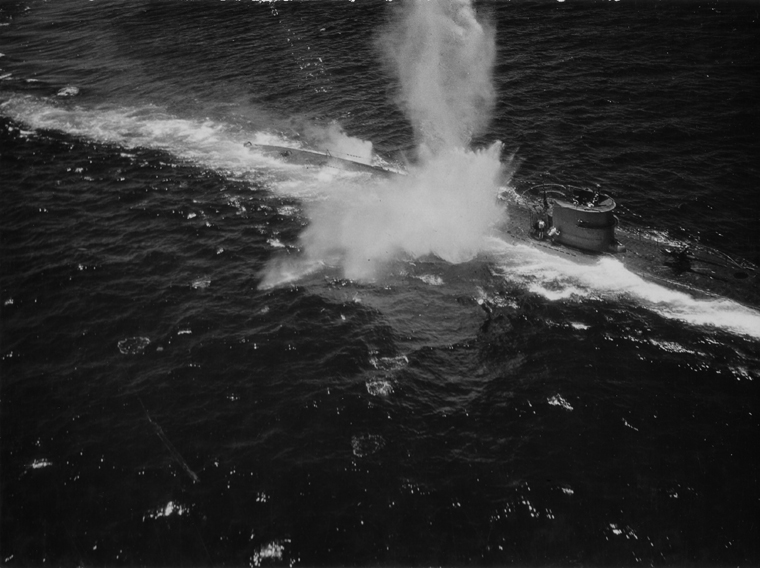
Detecting a submarine created a decision, not an automatic result. Ships had to interpret the contact, communicate and maneuver while retaining responsibility for the merchant vessels. A pursuit could become a distraction if it left the convoy exposed.
Support groups helped address that tension. They could reinforce a threatened convoy or pursue a contact while the close escort remained with its ships. The U.S. operational study identifies five such groups in the North Atlantic during April 1943, alongside improvements in training, direction finding and cooperation between aircraft and ships.
The improvement was uneven. The Royal Canadian Navy’s detailed history describes the heavy demands on Canadian escorts in 1942 and their equipment and training difficulties. A temporary withdrawal from mid-ocean work in early 1943 allowed refits and additional preparation. The eventual Allied advantage should not conceal how long crews had operated under strain.
This is where a list of inventions becomes an explanation of a turning point. Better sensors helped trained crews use their time. Aircraft disrupted the enemy’s approach. Additional groups gave commanders room to respond without abandoning the convoy. Each element increased the usefulness of the others.
A turning point was a change in initiative, not the end of danger
New Zealand’s Ministry for Culture and Heritage dates Dönitz’s withdrawal order to 24 May and records 41 U-boats lost during the month. Contemporary wartime assessments produced different totals, so precise figures should be tied to their source and scope. The central development is clearer than any disputed accounting: the losses were too costly for the existing offensive to continue on the same terms.
The Germans returned to the contest, and ships and lives continued to be lost until 1945. The U.S. Tenth Fleet, established on 20 May 1943, and later American codebreaking machinery contributed to the campaign’s continuing development. They cannot be used to explain the earliest convoy battles of that month simply because they belong to the broader success story.
May mattered because Germany lost the ability to sustain its principal North Atlantic challenge at an acceptable cost. The Allies gained a stronger basis for moving the resources on which future operations depended. That is a more demanding achievement than a single discovery: a transport system kept working against an enemy determined to break it.
It also changes whom we remember. The story includes mathematicians and inventors, but equally merchant seafarers, escort crews, aircrews, mechanics, trainers and the people organizing routes and repairs. Convoys arrived because those efforts could finally reinforce each other often enough to change the campaign.
Sources
The article distinguishes contemporary operational assessments from later historical summaries. The 1946 U.S. Navy study is especially useful for explaining mechanisms; its provisional submarine-loss assessments are not treated as definitive modern counts.
- U.S. Navy, Antisubmarine Warfare in World War II, chapter 5, reproduced by HyperWar.
- Naval History and Heritage Command, Samuel J. Cox, “Black May”.
- Royal Canadian Navy, The Battle of the Atlantic, 1939 to 1945, detailed historical narrative; and campaign overview.
- Veterans Affairs Canada, The Battle of the Atlantic.
- Royal Canadian Air Force, The RCAF and the Battle of the Atlantic.
- Manatū Taonga, Ministry for Culture and Heritage, Turning point in Battle of the Atlantic.
Photograph credits and public-domain provenance are given beneath each image. Sources checked October 2026.
Intelligence & the Allied war effort
D-Day’s Invisible Front
Histovia’s illustrated ebook follows another case in which information mattered only through the decisions people made with it: the deception campaign behind the Normandy landings.
US$3.90 · PDF + EPUB · By Histovia Team